I have often made the mistake of thinking that organization was everything. It isn’t! While getting organized won’t make you a great homeschooler, it can help.
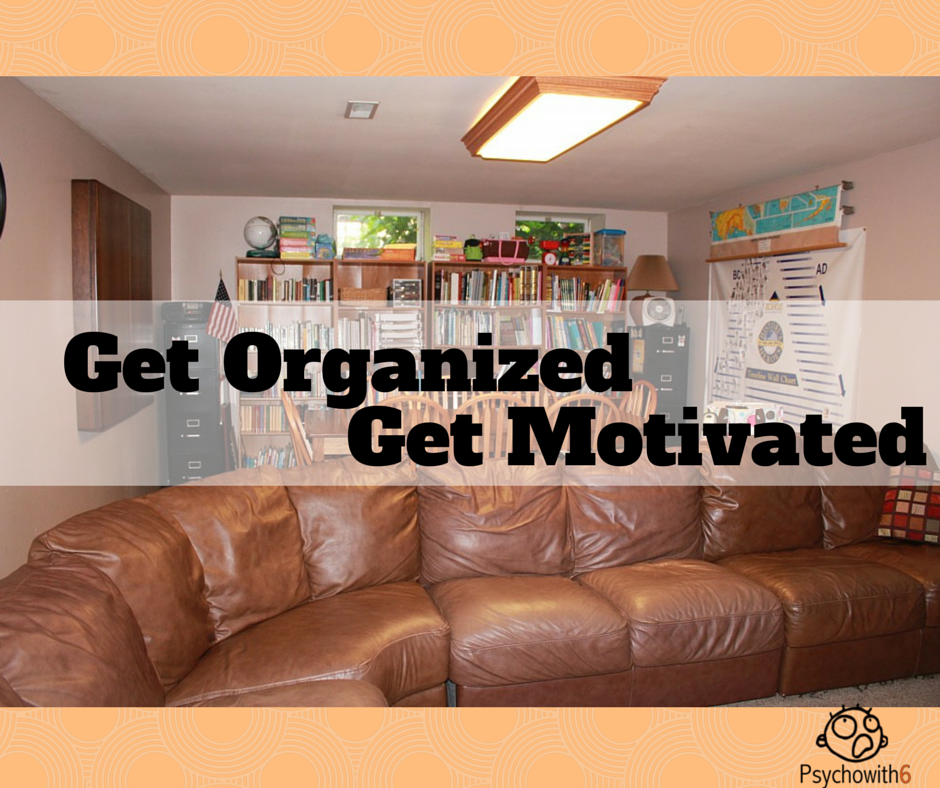
I used to hate my homeschooling space. It was cluttered, chaotic, and downright ugly. If you have many or young children, you will have to accept a certain amount of chaos. But if your space feels orderly, you and your students will, too. This summer, think about some inexpensive solutions to make a motivating space.
Get rid of anything you know you aren’t going to use. Give it away, sell it, or trash it if it’s something no one would want. I sold a curriculum book for $2 at a used sale that a woman told me she’d prayed she would be able to get inexpensively. That made purging and selling worth it to me!
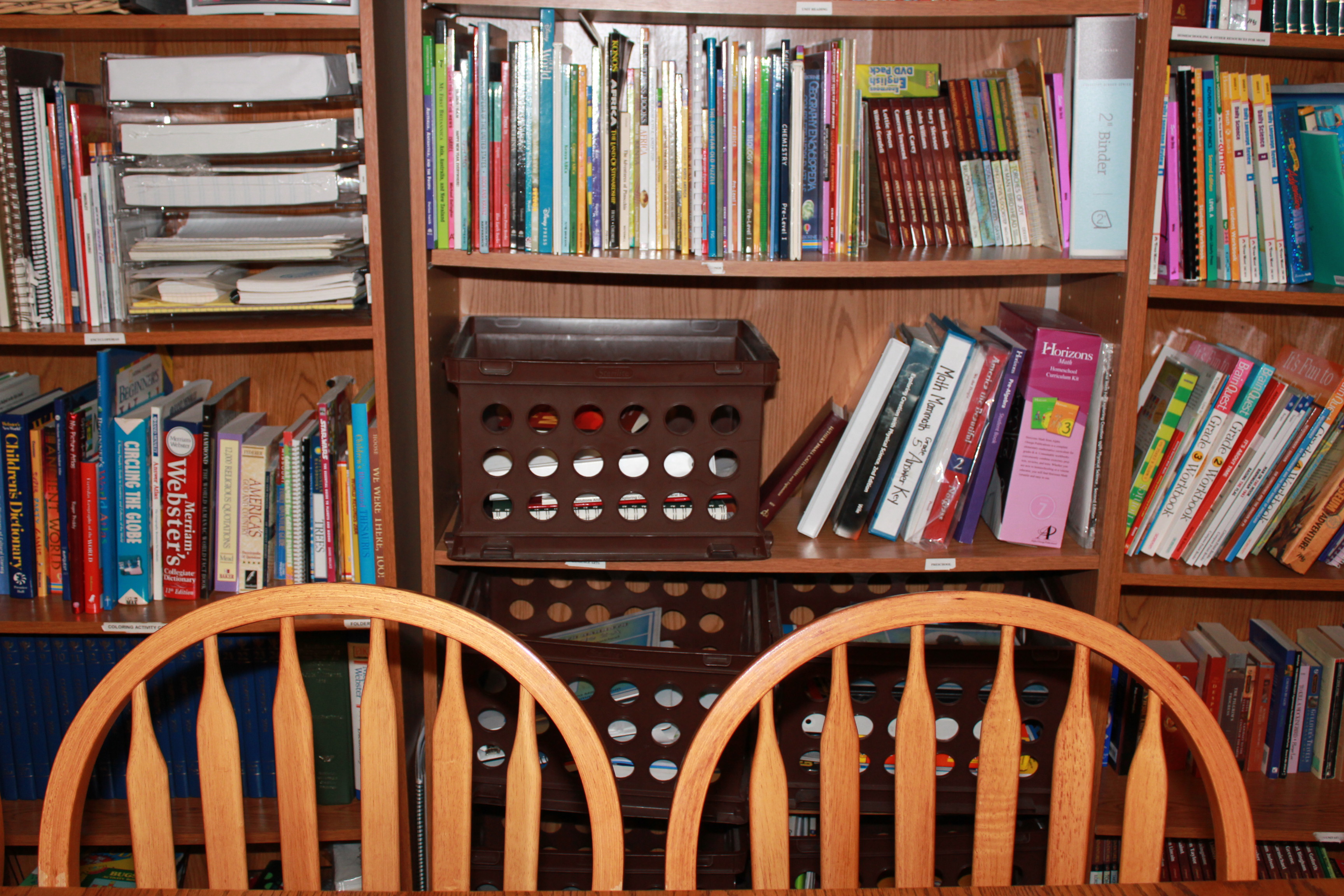
Make everything that you will be using in the upcoming year visible. I know I am not the only homeschooler who forgets she owns something and buys it again! All of my bookshelves are cheap office store purchases. They’re not good quality, but they do the job. If you need more books visible to you, consider buying more bookshelves. Craigslist is a great place to look!
Put everything you will not be using this year out of sight. The fewer distractions you have, the better. I keep unused materials in storage on even less sturdy shelves organized by science, history, and other.
Separate individual kids’ materials. I use inexpensive plastic crates for this purpose that I store on bookshelves.
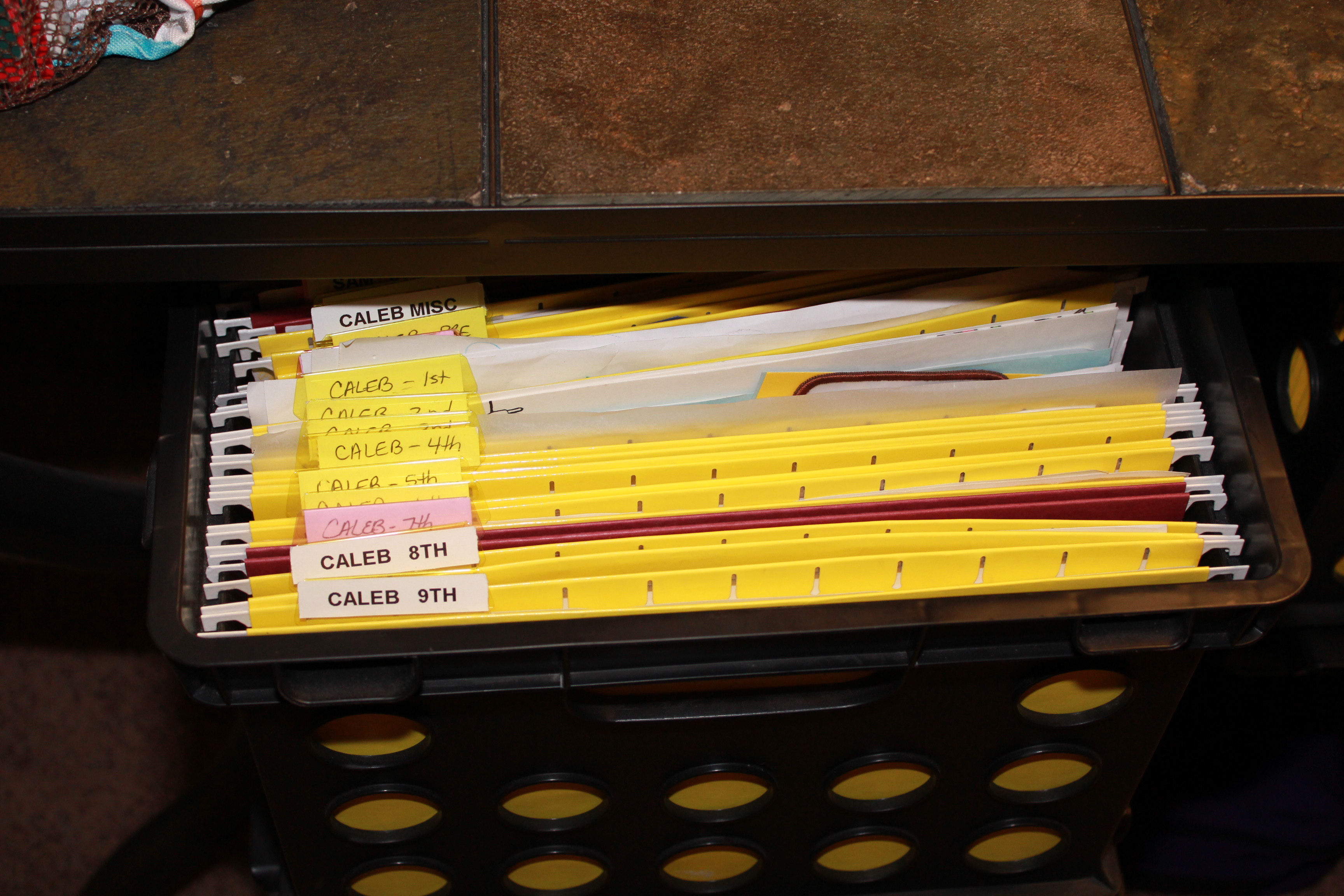
Create a space to store individual work for the year. I use additional plastic crates to hold files for each school year for each child. Besides being a place to record what we do to adhere to the law, it’s a great place to store memorabilia.
Create a record keeping system. I’ve tried just about everything and found that a paper system works the best for me. This year, I am combining my love for scrapbooking and junk journals with my homeschool record keeping. I created an album using Ditto products.
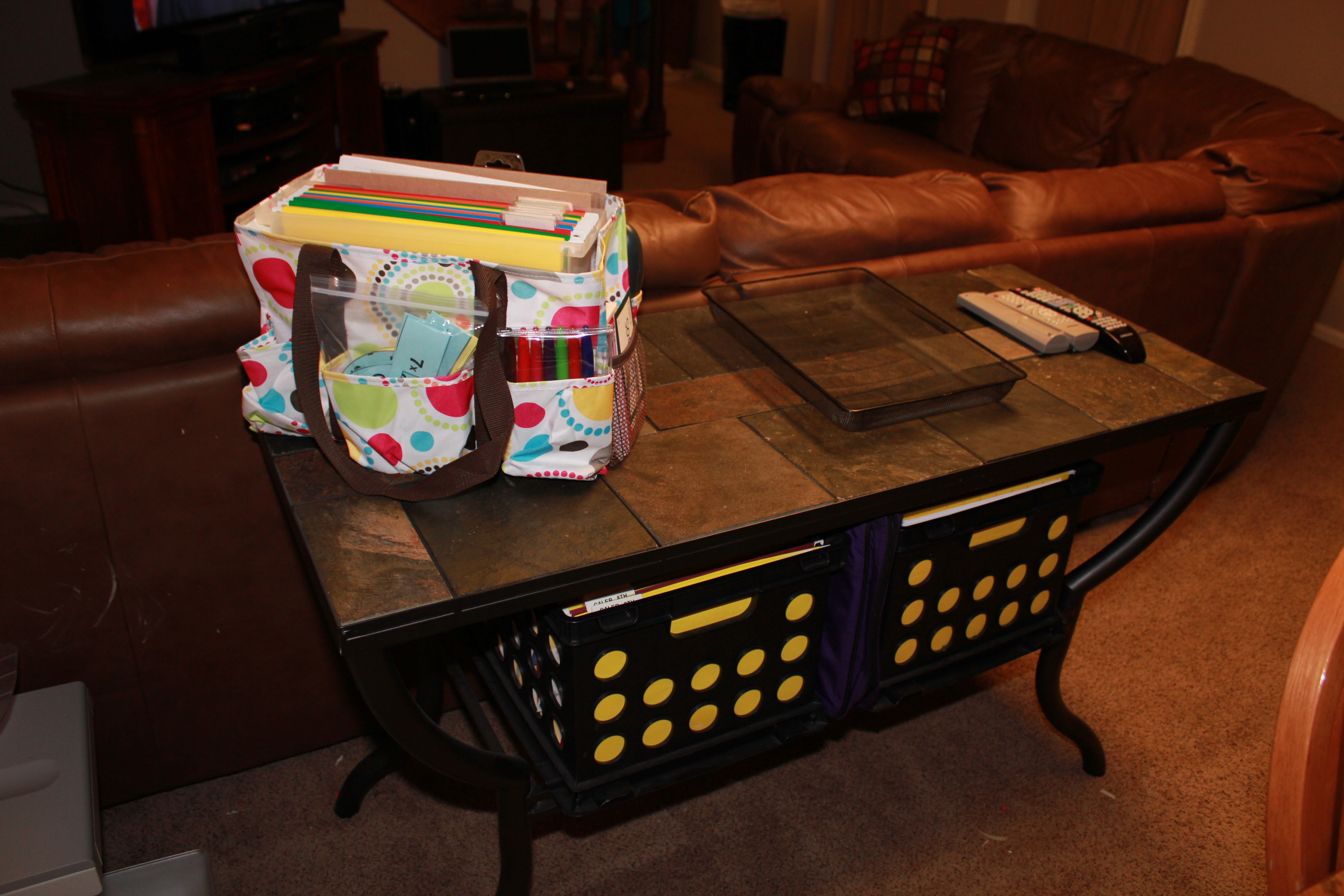
Create a homeschool toolkit. Homeschool teachers don’t have a desk where everything they need to do their job is at the ready. That’s why a mobile toolkit comes in really handy. Find a cute bag to organize all of your essentials. I was inspired by this blog post to create this toolkit:
Inside is my record-keeping journal (this picture was taken before I was done with it), files to hold work completed by each student in the coming year), pens, sticky flags, my label maker, flash cards, and more. The kids’ files from previous years are stored under the sofa table we bought from Craigslist.
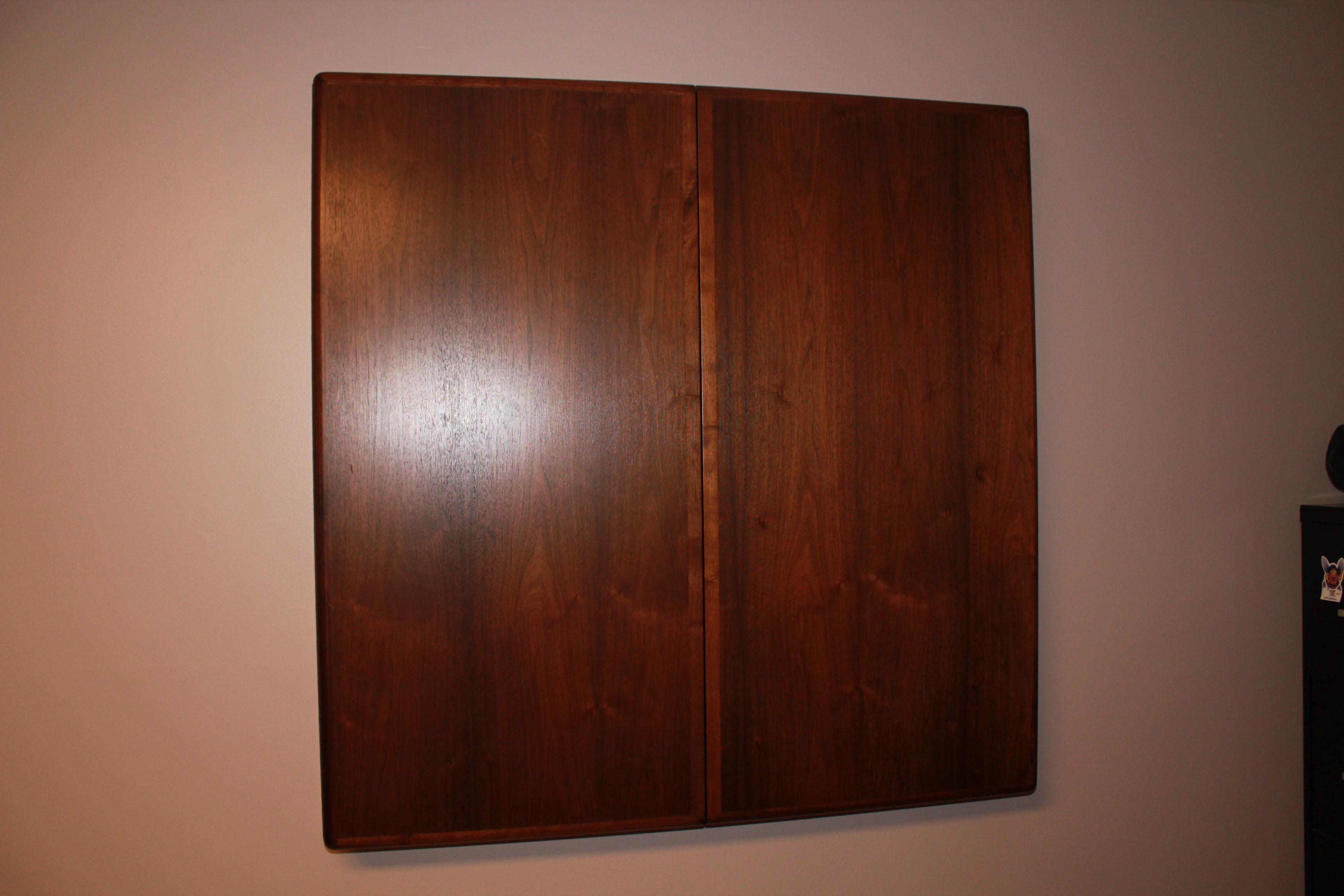
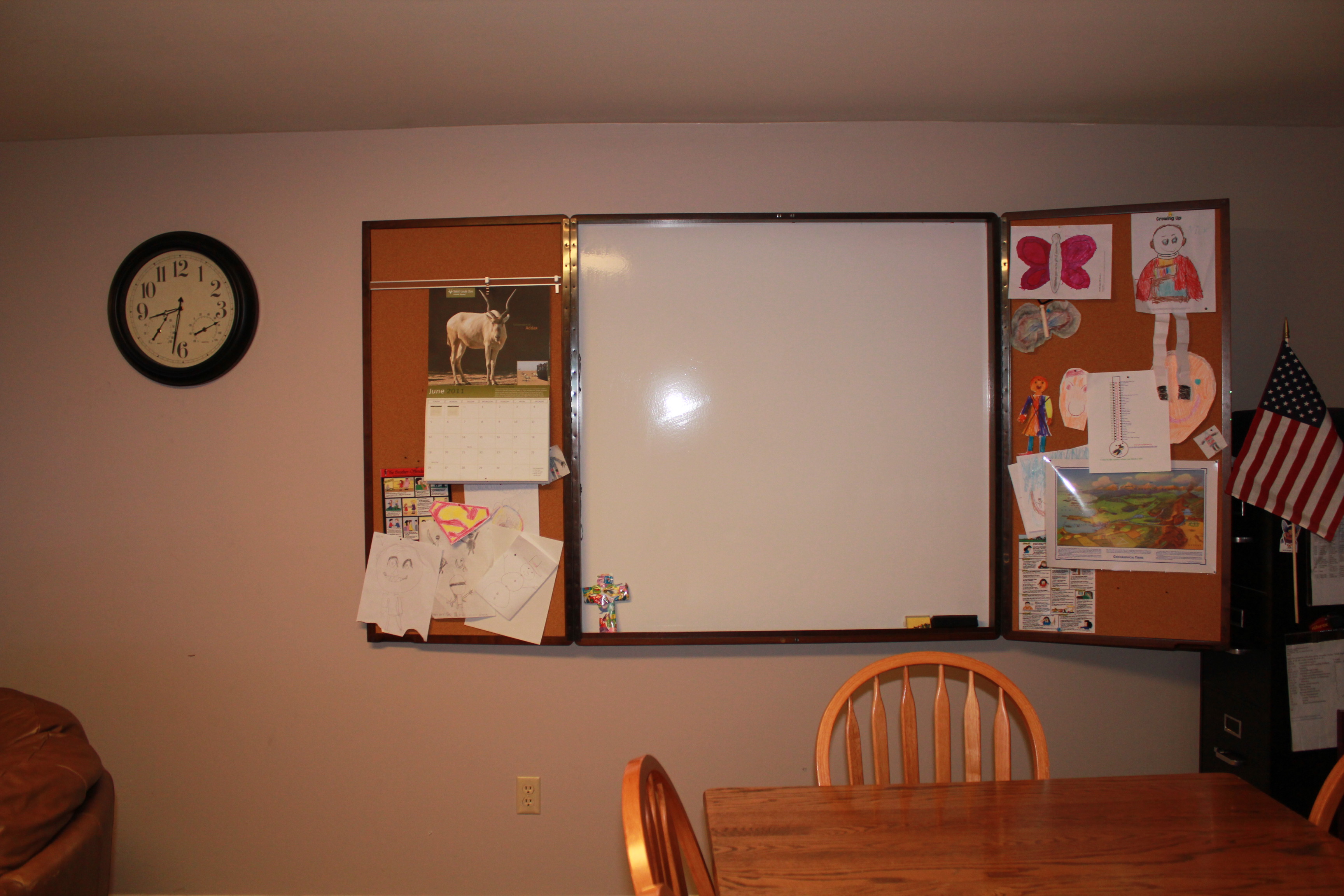
Decorate your space. I recently overheard two school teachers talking excitedly about getting into their classrooms and getting it ready for the school year. Classroom decoration has to be functional, but it doesn’t have to be ugly. My favorite parts of my school space are my pull-down maps I purchased from ebay and the white board/cork board I bought from Craigslist.
Functional, but all the mess is INSIDE.
We purchased our table and chairs from Craigslist also, but the paint and removal of scattered posters and papers from the walls made the biggest difference. Could you put information for your students on a display board that can be put away? Or could you frame them using art or poster frames?
Pray and ask for wisdom. We know that God will always give us wisdom! Before I made over our school space, I prayed about it. When I was in the middle of the chaos, I honestly didn’t know what to do. But God answered my prayer and gave me a space that motivates me and the kids, too. May He do likewise for you.
Have I ever mentioned that I homeschool six kids? As a result, I have stuff. A lot of stuff. Not only do we have a lot of toys and games (multiply just six gifts a year times six and you’ll see my problem. Of course, they get more than six gifts each!).
I have spent years coming up with systems for keeping toys, games, and puzzles organized. I have definitely found some approaches that work. For example, storing games vertically works better than horizontally or in bins. What also works is using our old ping pong table to provide storage for suitcases and bins underneath. What isn’t working is the putting away part.
Not only do I have six kids full-time, but I have had 11 more joining us for homeschool activities on Fridays. Our super fun co-op activities require lots and lots of art supplies. Using them is fun. Putting them away isn’t.
As you can see, I’ve tried clever strategies for storing paints and underneath the bench are more art supplies.
Yet another problem with our storage area is that it isn’t just for kids. We keep our gifts, gift wrapping supplies, electronic accessories, party supplies, and seasonal decorations here, too.
In our playroom is a second closet we use for costume storage. This is another area where I need A LOT because of our co-op activities. This year we had to dress for the Revolutionary War and for Africa.
I was determined to get control of these areas while participating in my simplify101 class and to be ready for next school year. The good news is I no longer have toddlers or preschoolers. In theory, the kids should be of help. 🙂 I did enlist everyone’s help in decluttering. The approach that works best for me is to lay out a blanket on the playroom floor. Any of the kids may take items that they wish to donate to the blanket. Anything not worthy of donating goes directly to trash bags. This system works beautifully because everyone can see what is ostensibly being donated. Otherwise the older child gleefully puts all the younger’s favorite toys out for donation. Likewise any educational items would go bye-bye without my watchful eye. My husband played a crucial role in boxing up all the donated items and drove them to the charity the same day.
I haven’t shown you every part of the storage room (there are other shelves that were organized and hidden bins that were emptied), but these are the results!
The red bucket on the right is my solution for keeping this room organized. Anything that needs to be put away goes in the bucket, NOT on the table. When it’s full, it will be emptied.
My other idea was to put plastic tablecloths I already owned on the ping pong table. The paint is chipping off of it anyway and it creates a don’t-mess-me-up atmosphere that partners well with the red tub.
The biggest job with the craft and seasonal storage areas was to throw things out.
I was able to get rid of enough stuff that I could keep a bin of other costume basics that was being stored with the toys and games. As you can see, I am continuing to store outsized shoes here.
Hope I’ve inspired you to unload toys, crafts, or costumes that you don’t use, need, or love!
I have a friend who will begin her homeschooling journey this fall. She has been asking some excellent questions like this one: how do you homeschool with toddlers and newborns? I homeschooled for nine years with toddlers and newborns and while I didn’t do a perfect job of it, I do have some things to share.
The first and most important way to homeschool with little ones is to reign in your expectations. In this regard, I had an advantage because I had never homeschooled WITHOUT toddlers and newborns in my home. If I had, I probably would have been tearing my hair out! As it was, it was all I knew. If you are picturing school at home rather than a home that is a school, you will end up frustrated. Babies and toddlers aren’t allowed at traditional schools. It’s impossible to create the same quiet, orderly atmosphere at home as a classroom teacher can when you have little ones. But that doesn’t mean your homeschool is inferior!
Recognize that there are advantages to having babies and toddlers in your homeschool. They aren’t an interruption in your school day; they are the reason you are teaching. Having older children experience young children is a part of their education. I taught a college developmental psychology course and had to ask the students to find a way to spend time with young children. The sad fact is that in our lower birthrate, age-segregated society, having a lot of experience with young children is rare. Younger siblings teach your older children to be gentle, patient, and less self-absorbed. The olders learn how to teach the youngers. The youngers learn from their siblings and listen in as you teach the olders.
Homeschool in the most baby-friendly area of your home. The last thing you need to worry about is the littles getting hurt while you’re explaining long division to junior. The room I used as our primary school room was attached to our playroom. I allowed the youngers to move from room to room as they chose. Lower shelves in our school room had toddler-friendly books and toys. Consider having a box of school time toys that are only available at set times.
Buy your toddlers the same workbooks as their siblings. David Hazell of My Father’s World does an excellent talk on the subject of occupying toddlers. One of his best suggestions has to do with the fact that we homeschoolers buy all kinds of new school goodies for our elementary kids every fall and nothing for the toddlers. David calls this “Christmas Without Me.” He recommends buying identical workbooks even if it costs you a little dough. The peace you get in return is well worth it!
Schedule projects that aren’t baby-friendly during nap time. I spent lots of time reading to my older kids while nursing babies. When it came time to do the timed science experiments, the baking, or the obstacle course races, I made sure the little guys were sleeping. Does that always work? Nope! Some days there is no nap. That’s when you reign in your expectations. Tomorrow is another day.
Schedule play dates with other homeschooling moms with young kids. You’ll discover you’re not alone and your friends will help you reign in those expectations. For several years, I participated in a Bible study with other moms while a teen watched our youngsters. A Mothers of Preschoolers group is another great way to connect with moms in the trenches.
Make sure you have “me” time. When I had lots of little ones, I had a housekeeper come in twice a month. I also had my niece watch the kids for me a couple of hours every week. Occasionally, I would use that respite time to go on dates with my husband. It helped me enormously! If you can’t afford these options, swap babysitting duties with a friend or clean together. I’ve used these approaches, too. Having some time away isn’t selfish; it helps you to be a better mom and wife.
Remember that this is a short season. Even though I had nine years’ worth of little ones in my homeschool, it flew by. Now I wonder why I had such a fit about all the books being pulled off the shelves, the toys scattered everywhere, and the lessons we didn’t finish. These are precious days. Enjoy learning together.
Do you have any other suggestions for homeschooling with babies and toddlers? Join the conversation at Homeschool Sanity on Facebook.
I have been exercising regularly for over 20 years now. The habit didn’t come easily to me, but I am very thankful for it. I don’t believe I could homeschool six children without the energy, stress relief, and better health I gain as a result of working out. If you would like to develop the exercise habit (and I hope you do!), here are my best tips for making it happen.
Associate with people who exercise. I list this first because I believe this is arguably the main reason this naturally sedentary person has become a faithful exerciser. I married a workout fanatic. Deep down I hoped that his habit would rub off on me and it did. I just didn’t realize that he would often rub me the wrong way in the process! If you didn’t marry an exerciser, you can still gain the power of peer pressure. While encouraging a friend who doesn’t exercise to join you for a walk or workout is a great idea, it’s an even better one to buddy up with someone who already gets moving week in and week out. I currently benefit from knowing that friends who exercise are going to ask me if I’ve been doing my latest workout.
Arrange to work out at the best time of day. I have exercised faithfully at every time of day during various seasons of my life. Currently, I exercise first thing in the morning. I find that moving early wakes me up, removes the need for more than one shower, and prevents interference. But I don’t believe the first thing in the morning is the ONLY time that works. I’ve also split my workouts into two daily sessions and that worked, too.
Anticipate your inner slug. I know exactly what the lazy me is going to do and say when I’m tired, cold, and cranky. So I make it easy for her. I make sure my workout space is clear (I currently work out at home) before I go to bed. I have my tennis shoes and socks waiting for me right outside my bathroom. I used to have my exercise attire folded and ready to go, too. Now because I can be really, really stubborn, I have made it even easier to get moving. I wear my exercise clothes as pajamas! If the thought of sleeping in a sports bra gives you nightmares, you could always leave your bra with your shoes. If I still don’t want to work out when I get up, I have to take off my workout clothes which is a little like driving to the gym and then going home; it’s silly. Sometimes the lazy me is really insistent. In those cases, I imagine how I will feel later in the day after skipping my workout. If the whiner still carries on about it, I give her permission to do as little of the workout as she wants as long as she starts.
Agree to make it fun. I honestly understand why so many of us struggle to make regular exercise a part of our lives. Our ancestors got all the activity they needed as part of their work. The activity was always purposeful. Women beat rugs, kneaded bread, and walked everywhere. Now we ask women to pedal bikes that don’t go anywhere, walk on treadmills like caged hamsters, and repeatedly lift weights that don’t need to be put away. If you can get your exercise doing meaningful work instead, by all means, do it! But most of us are going to have to find ways to give meaningless activity some purpose. Some things that have worked for me are working out with a friend (the time flies as we talk), working out with my kids (I love to teach anything!), participating in a challenge or competition (I did Body for Life for 12 weeks), playing a sport (tennis), and mixing it with entertainment (listening to audiobooks or reading that I only do while exercising). There are so many great options for exercising today and you don’t have to stick with just one! Keep trying activities until you find something you enjoy.
What tips and tricks have you found that motivate you to exercise?
I recently began reading Gifted Hands, the Ben Carson story (Kids Edition) to my children and I believe every homeschooling family, school teacher, and librarian should be reading it to their students.
The reading level is appropriate for multiple age levels and my children beg me to read it. Then they beg me to read another chapter. The message that faith and reading are an integral part of success is communicated in a compelling way that even my eight-year-old reluctant reader caught. In fact, my son bragged about how many books he read last night.
Other important teaching is diligence, the impact of racism, and what it’s like to be poor. Don’t miss this inspiring addition to your homeschool library.
The question homeschoolers are asking each other at the beginning of summer is, “Do you homeschool year round?”
I usually have a tough time answering that question. If you ask me if I’ve intended to homeschool through the summer, the answer would be a resounding YES! Have I actually homeschooled during the summer? Hm. Sort of?
As I approach yet another summer with great intentions, I am convinced that continuing our schooling all year isn’t going to motivate my kids or me. So I won’t do it!
Homeschoolers who take a break in the summer months do it for a variety of reasons. Kids and moms need a break. It’s hard to focus when the beautiful weather beckons. Vacations and numerous activities can interrupt the flow of schooling. Neighborhood friends, cousins, and even some dads are off work in the summer. It can be beneficial to be on the same schedule as the schools for social and practical reasons.
But that’s not why I say you might not want to homeschool year round. You might not want to homeschool year round if you want to be a motivated homeschooler. One of the principles of motivation is that we only want to do things we know we can do. In order to know we can do something, there has to be a point at which we know the task is complete. That’s one reason housework is so demotivating: it never feels done! If we create a perpetual homeschool, your children are denied the opportunity to be successful in completing their learning. Their education can become a never-ending assembly line of work that will bore them (and you).
So how can you and your kids continue to learn every month of the year without losing the joy of it?
Choose a last day of school and celebrate it. Have a special meal or treat. Consider giving out certificates or awards noting your child’s achievements. You might want to invite your spouse, extended family, or other homeschoolers to participate in your celebration.
Rest. Have at least a week where you and your students can relax, recharge, and regroup for another session of learning. Don’t even think about “school.” You should consider resting after each unit of school (see below).
Break the school year into units. Schools do this to maintain motivation and so should we. The four seasons work great for this, but you could have shorter units of time, too. In another post, I’ll share how to use units of time to increase your productivity significantly. By the way, this unit approach works for housework, too. If we have a list of chores to be done on a given day and we finish it, we are DONE with housework for the day and can move on to something else (even if there’s more to do).
Change things up. This is the best strategy for maintaining motivation if you are learning every month. If you use a more formal approach to teaching, consider doing unit studies or unschooling during one of your school seasons. Avoid the trap of thinking you have to use a curriculum or approach all year. Use it for a season and then try something else.
Spend a season doing the things you wish you had time for. The subjects you put off, the topics you want to explore, the classes you’d like the kids to take–use one season to do only these things. I think of the homeschooling mother of five I met who died while her children were still young. What did she wish she had made more time for? I bet it wasn’t math workbooks.
Learn what you want to learn for a season. Make time to read, sew, scrapbook, take a class, get in shape. Tell your kids what you’re learning and share your passion for it. Involve them in what you’re doing and the division between me-time and teaching time will disappear. We can’t expect our kids to love learning if we don’t model it.
Set achievable goals for each teaching season. My problem in the summer has been imagining I can get more done than is feasible. Give your kids (and yourself) a standard that you can reach with only a little stretching. If you’re goal-oriented all year, take a season to let go of the expectations. See what God has in store for you and your kids every day instead.
This summer, I am not going to homeschool. I am going to have fun learning with my kids. How about you?
I’m a Christian psychologist turned homeschooling mother of six. My life can be a little crazy, so I look for sanity-saving ideas to use and share. I hope you’ll read my About page to learn more.