I’m having a cranky day when I’m wondering why I bother to:
Write what few people read
Clean when it gets messed up again
Buy things that are broken right away
Be kind when I don’t get kindness in return
Teach my kids when the lessons seem quickly forgotten
Work toward my goals when almost no one cares what I do
I’m sick and tired, thus I am vulnerable. At these times, I hear the voice of my enemy saying, “Why bother?” He knows well how I depend on encouragement from others. When it isn’t there, he knows how to turn my funk into a fiasco. When he is done talking, I want to go back to bed and forsake writing, homemaking, kindness, parenting, and working forever.
But the same question that I asked myself I have to ask my enemy. Why bother? If I were an insignificant woman, why would you spend your time and energy trying to talk me into giving up? Jesus breaks into the discussion.
“Away from me, Satan! For it is written: ‘Worship the Lord your God, and serve him only.’” – Matthew 4:10
We bother because we are serving the Lord. He reads every word we write and He sees us cleaning, returning kindness for evil, teaching the resistant learner, and achieving His purposes for us. He likes it all.
So why do we bother listening to any voice but His?
I think I learned more about changing behavior in my undergraduate psych lab training rats than I did in graduate school. We had the daunting task of teaching an animal that can’t speak (besides a squeak!) how to play basketball with a marble. As you look to your homeschool future, your task may seem just as difficult.
Before we did any rat training, we took one very crucial step that we often neglect in our homeschooling: we kept them hungry.
Well-fed rats aren’t motivated to do anything because they’re already being rewarded with what they want most. Rats that are a little hungry (not weak with starvation) are very attentive to anything that earns them a food pellet. The hungry rat that I trained with my partner very quickly learned to press a bar, peek through a window, swing on a trapeze, and yes, play basketball with a marble–all with no lectures.
Children that can communicate with us should be capable of learning a great deal more, but often they don’t. Why? They aren’t hungry.
Why Kids Aren’t Hungry to Learn
Today’s children are being fed a steady diet of things more rewarding than learning. Reading, painting, discovering, experimenting, acting, writing, computing, solving, and creating are naturally rewarding activities. But these treats can’t compare with the taste of electronics. If you’re meticulous about keeping your kids away from screen time, good for you! But if you’re an average American family, your kids still may be full on the rewards of a prosperous lifestyle. Toys, games, trips, treats, and entertainment aren’t just for special occasions anymore. Even if you refrain from giving your children too much, you may have relatives who fill the gap.
A rat who isn’t hungry won’t be bothered to press a bar for a food pellet and a child who isn’t hungry to learn won’t be bothered to read.
How Can We Keep ‘Em Hungry?
I live in the same keep-em-fed world you do and I’m constantly looking for strategies to keep my kids hungry to learn. Here are a few that I use or would like to:
Limit screen time. This has been my biggest challenge in a house full of boys. Lately the challenge has been having friends call or come over and want to play games and I cave. My plan is to let their friends know when games are off-limits.
Limit gifts. When you can’t think of anything to buy your child (been there!), they have too much. I have made some attempts in this area, but want to be even more vocal about requesting time with people they love. Time learning together is a double gift!
Say no. Deprivation makes the reward all the sweeter. Saying no is a good idea even when the request is positive. Rewards that are given constantly lose their power to motivate behavior.
Make them earn rewards. If kids have free access to lots of stimulating, fun activities that have little educational value, motivation disappears. Educational games should be used as dessert, not the main course.
Offer less appealing alternatives. Allowing my reluctant reader to choose between reading and worksheets has helped him develop a great reading habit. Use the choice between undesirable chores or busy work and the subject you want your child to focus on to keep her hungry.
Let them get bored. Just like few people know what it’s like to be really hungry anymore, few of us are familiar with real boredom. To find stomach hunger, you may have to go without food for hours (or days!). To help your kids find true boredom, you may have to go without screens, noise, toys, or outside playmates. Consider making a day of your homeschool week a day of fasting from all these “fast-food treats” so you can rediscover how delicious learning really is. I’m definitely considering it.
they have become rich and powerful and have grown fat and sleek. Their evil deeds have no limit; they do not seek justice. (Jeremiah 5:27b-28).
I’ll be honest. I have some fat rats at home. I think my belly is protruding, too! Do you have any other ideas on how I can keep my kids hungry to learn? Just a quick caveat. I think it would be easy to leave our little rugrats weak from starvation, too. A little fun and game time gives kids the energy they need to get serious about studying.
If you love to read blogs like I do, you have probably subscribed to a lot of them. I have my family’s and friends’ blogs in my Google reader as well as blogs in areas of interest to me. Subscribing is easy; reading them all is hard! But I’ve found a solution that works for me. Maybe it will work for you, too, regardless of which reader you use.
Purge all blog posts from your reader. Yep, you read that right. The only reason I wouldn’t suggest you do this is if you haven’t subscribed to many blogs and you’re keeping up with what you have. But if that’s the case, why are you reading this post? Start fresh. I know some of those posts may be life-changing, but be strong and click “mark all as read.”
Set up folders based on day of the week, subject, or both. You can keep up with your blog reading by dividing and conquering. Using your reader, create folders labeled for days of the week that you know you have time to read. If Mondays are never a good day to read, don’t create a Monday folder. Alternately, you can simply create subject folders that you will then assign to days of the week. I suggest using subjects that correspond to the first letter of the week day to help you remember (Money – Monday; Teaching – Tuesday; Food – Friday). That way you don’t have to include the day in the folder label. I use both day folders and subject folders because sometimes I have a hankering to read more on a given subject, even if it’s not the day for it. I’m like that.
Assign each blog to a day and/or subject folder(s). I assign most of my family and closest friends’ blogs to every day folder. Why? Because then I won’t feel guilty when they ask, “Did you see my post on…?” Ree Drummond will never ask me that so I don’t assign Pioneer Woman to every day. Her food blog posts get assigned to Recipes and to Wednesday which is when I do my meal planning. Not sure a blog is for you? I assign those to a Try It folder.
Schedule a time to read your daily blog folder. If you don’t think about when you can and will read, you just won’t. Of course, if you’ve decided that this is all too much bother, and you don’t want to read blog posts, I’ve just done you a favor. Unsubscribe from blogs and do something more productive, like pin pictures to Pinterest. If you do want to read, then make a habit of it. The best time for me is at lunch on my iPad. I love Flipboard.
If you haven’t added Wonder Women to your reader, I’d be honored if you did! Do you have any other suggestions for keeping up with blogs?
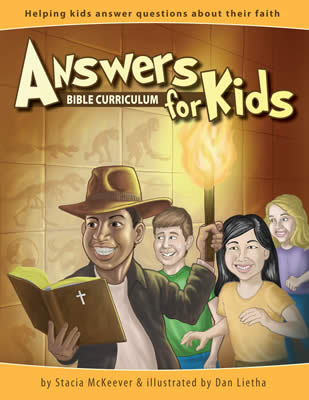
There are a number of great resources for teaching apologetics today and what a blessing that is! As a Christian homeschooler who believes in a literal interpretation of Genesis, I am a huge fan of Answers for Kids. While it’s listed as appropriate for ages 8-11, I have used it comfortably with my five youngest, ages 5-13. Few Bible curriculums I have used are as well suited to multiple ages.
One of the best features of the curriculum for us is that it includes colorful graphics on the included CD that grab my kids’ attention. We attach our laptop to our TV in the school room so everyone can see. Doing this also allows us to quickly read the associated Bible passages online. I have my kids take turns reading them and treat doing so as a privilege to be earned once he can read. I have just one more child to go!
Another excellent feature of Answers for Kids is the repetition. We use a number of different resources for teaching Bible and don’t use them every day. The review is a refresher for the kids and me, too!
I consider myself fairly knowledgeable in apologetics, but I have learned new things as I’ve taught the kids. In fact, sometimes the kids have to try to get my attention as I start reading without them! This relates to why I think Answers for Kids is a great Motivated Homeschooler resource: Motivated teachers beget motivated students. If you love it, your kids are likely to love it, too.
Our duty as Christian homeschoolers isn’t just to shelter and protect, but also to equip them to defend their faith.
Finally, this curriculum addresses the challenges to faith our kids are likely to encounter in the future. Answers for Kids is an excellent elementary to junior high weapon for spiritual warfare. Answers in Genesis has a number of other materials I would recommend.
I blogged about the book, The House That Cleans Itself, on Wonder Women and the great impact it had on my housekeeping and filing systems. Lately I’ve been wondering if the principles of the book can be applied to homeschool motivation. I think it can!
The most powerful idea in Mindy Starns Clark’s book for me was the idea of working with what is rather than what we wish it were (I love alliteration, don’t you?). This concept enabled me to let go of the idea that I would ever be a meticulous filer. Instead I worked with what I am, which is a file digger. By filing everything in broad categories into large Pendaflex files by time (most recent folders in front), I’ve been able to find things but haven’t had the stress of the massive to-file pile. I then used this notion to help me find a solution to the kids’ bathroom disaster.
My homeschool isn’t teaching itself yet, but I definitely have some ideas that could move it in that direction.
What I Wish
We were early morning homeschoolers
We could get all our school done before lunch
The kids would do more work independently
I had more energy at certain times than I do
Working With What Is
We start school later now to accommodate later bedtimes. The bonus is I get more morning time alone which is my optimal work time.
We do the fun stuff after lunch. The kids bug me to do it which motivates me to keep working into the afternoon.
I work with the kids on stuff they would otherwise resist on their own (that’s the joy of homeschooling, right?).
I quit scheduling anything for those times when I know I’ll be too tired and got rid of guilt.
Stop Fighting and Start Flourishing!
Making it Work for You
Start by making a list of the aspects of your school that have been very resistant to change. Next, imagine that those things won’t change (depressing, I know). Finally, decide what you can do to make your homeschool run more smoothly, despite those less-than-optimal students and teacher(s).
It may take a while for you to find satisfactory solutions, but the process will be much easier when you let go of those wishes and start working with what is.
P.S. This process works with personal goals, too! Give it a try and let me know what happens.
I think I have tried just about everything to teach my kids their math facts–flash cards, repetitive curriculum, electronics, games, pictures, and software. The problem isn’t so much teaching them as it is the kids retaining them.
While I am happy with my current math curriculum, I decided to give Learn Math Fast a try. The basic setup for book one is:
Teaching using money
A worksheet on the facts
A timed test on the facts
Competition Can Motivate
My children are competitive. While I know many homeschoolers aren’t wild about competition, I have seen the value of it in teaching–even when the only way you are competing is with yourself.
I time each of the kids with my iPhone (it’s my version of a Swiss Army knife). They know when their siblings have completed the test under the time limit. They also know how much time they have to shave off to come in under the time limit set in the book.
Rewards Can Motivate
Yep! Learning is self-motivating, but offering my kids a small reward for passing the timed test has them begging me to learn their math facts. Not even the math video games they’ve played have had that effect. The combination of competition and rewards has been a winner for me.
The Results?
My kindergartner and second grader know their addition and subtraction facts cold. The upper elementary kids are making progress on multiplication and division. I expect them to really get them down when their younger siblings start learning them.
When it comes to motivating kids, timed tests, competitions, and rewards can be very effective!
Do you want to give Learn Math Fast a try or could you get the same results using your current curriculum or flash cards? Do you have any tried-and-true tips?
Through 12/5/15, get $5 off one book using code JUST1BOOK or $20 off the 7-book set with code ALL7BOOKS at LearnMathFast.
I’m a Christian psychologist turned homeschooling mother of six. My life can be a little crazy, so I look for sanity-saving ideas to use and share. I hope you’ll read my About page to learn more.