I wrote previously about family and personal devotions. Now I’d like to address how to motivate your children to enjoy studying the Bible for school.
I have mentioned two aspects of what we have used in previous posts: Answers for Kids and Memlok for Bible verse memorization. I’d like to share with you a few other resources we enjoy and what has been the key to making Bible time something the kids beg for.
I purchased the Family Bible Library a few years ago and absolutely love it. I was concerned because the text isn’t straight Scripture, but it offers so much more. This resource, together with Color Thru the Bible that we use to memorize Bible books, are the core of our curriculum right now.
In the past, we have enjoyed Firm Foundations (which we will return to soon) and the devotional A View from the Zoo, among many other resources. No matter which resources you choose, I believe you can make Bible time a favorite subject by employing principles that have been key to the resources we’ve chosen:
Start with Stories
There is a reason that children’s Bibles are almost always made up of exciting historical accounts from Scripture, otherwise known as stories. Even if you choose to use the Bible as your only text for Bible time, you’ll want to begin with Genesis–the book comprised of great stories.
When reading from the Bible or any other resource, I frequently look up and tell it like I would if it happened to people I knew. I use my voice and my hands to really bring it to life. If you don’t feel comfortable with my more dramatic style, let your children dramatize as you speak. My kids absolutely love acting out the stories. Yes, they get very silly, but I know they will remember what we’ve learned forever.
Ask Questions
The Family Bible Library books include comprehension questions after each story, but I often make up my own when using our texts. Vary the kind of questions from facts to opinions. For example, ask if your child would have been afraid of the giant Goliath and why or why not.
The Family Bible Library includes Bible trivia questions which my kids are crazy about. I have also used the 365 – DAY BIBLE TRIVIA CHALLENGE to get them motivated to expand their biblical knowledge. While I recognize no winners or losers, the quiz aspect appeals to my competitive kids.
Participate as a Family
Bible time is one subject that the kids enjoy studying together. While my high schoolers have and will do their own Bible studies, their participation is a review and an inspiration to the younger kids. We also love it when Dad shows up in class to join in and see what we’re learning.
Part of family participation is using materials that you learn from and love. Because I love Bible time, our children do, too.
In an upcoming post, I will share how to help children memorize–something that also makes Bible time a favorite subject for our kids.
Although I haven’t struggled much with personal devotion time, family devotions have been very difficult for me. Here are my struggles and solutions I’ve found that you may be able to relate to.
Husband Not Home
My husband works out of town some of the time and also is frequently gone in the evenings for sports. While I prefer to have him lead and participate in family devotions, I have had to accept that we are going to do family devotions even in his absence. That acceptance has made them much more consistent in our home.
Husband Not Leading
Even when my husband was home, he wasn’t leading. I discovered there were several reasons for that.
One, sad to say, is because I would butt in when he was leading. On one particular occasion, I blurted out something I thought the kids should know and he said, “I was just going to say that.” Whoops.
A second issue that has prompted my husband to be less interested in leading is his need for reading glasses. He is frustrated that he needs them now and honestly prefers not to read. Just because I am reading doesn’t mean he isn’t leading. He listens to what I read and then takes the lead in asking the kids questions and relating his own teaching on the subject.
A final issue that prompted my husband to be less interested in leading some types of devotions is that the materials he needed weren’t at hand. I realized that as his help-meet (See Created to Be His Help Meet: Discover How God Can Make Your Marriage Glorious by Debi Pearl), I could make sure all the objects for the lesson were in place. Then he could do what the leader does best. Imagine your pastor coming to preach and being expected to find his own microphone and stand. Not very conducive to good leadership! Now I make sure he is equipped to fulfill his calling.
Devotions are Too Time-Consuming
I have tried many different types of family devotions and the ones that have worked well are short. I have shared that our family has tons of fun already, so the devotions that are designed to get families having fun together aren’t essential for us. We like to get the heart of the issue and then go about our day. What we currently use and love is Character Building for Families (Volume 1). We are working through Volume 2 right now. I found one doctrinal issue presented that doesn’t fit with our faith, but the rest has been excellent for discussing what is most important to our family–godly character.
Devotions Don’t Become a Habit
A final problem we’ve had is that although we’ve enjoyed doing devotions together, we aren’t faithful in doing them regularly. I’ve discovered that this is because we haven’t paired family devotions with an anchor activity that we always do. I tried to schedule family devotions for weekend evenings for example. We never know what we’re doing then, however, so devotions just weren’t happening. We now do devotions at meal time. We always eat so unless we are bolting out the door immediately, we have devotion time. This video demonstrates how simple family devotions at mealtime can be.
Family devotions will likely be one of the memories our children and we cherish most–both for the fact that we learn from God and we are spending time together.
One of the most common questions I get from young mothers is how to find time for personal devotions. We all know how vitally important it is for having the energy we need to do all that we do, but when you’re up multiple times feeding a baby, awakened early by a toddler, and even chased into the bathroom by your kids, how can you find the time?
I’ve been there. But I had very little distress about my devotional life during that particular season of motherhood (my youngest is now six). Here’s why:
I Redefined Personal Devotions
Is devotional time an hour spent in your quiet spot reading the Bible, completing in-depth Bible study assignments, and praying over every need in neatly organized categories? Sure, but devotions can take many different forms.
Having devotions can also mean taking minutes, seconds even, to connect with the Lord. It can mean meditating on just one Scripture throughout the day. It can mean talking to God out loud while your children observe you. “Help me!” may be all you manage to eek out. It can mean forgoing formal Bible study during this season of your life. It can mean reading a brief devotion online while going through email. Devotional time can be praying with your husband at bedtime. It can be singing or playing an instrument. It can even be devotions that you share with your children. Susanna Wesley is said to have found time to pray by sitting amidst her children with her apron thrown over her head: Susanna Wesley (Women of Faith (Bethany House))
The best thing I can say to you tired, time-pressed mom is not to feel bad. The Lord knows you are in a season of your life that requires much of you. He is caring for you and hearing the Spirit groan for you on your behalf even when your lips aren’t moving.
In the same way, the Spirit helps us in our weakness. We do not know what we ought to pray for, but the Spirit himself intercedes for us through wordless groans (Romans 8:26).
But What if You are Desperate for More Time?
Ask for help. Ask your husband to give you some time so you can read the Bible and pray alone. I hired our niece to come and help out one afternoon a week. A moms’ Bible study group I was in often hired sitters so we could study and discuss God’s Word without interruption.
Pray about it. Ask the Lord to give you more time with Him. He may get you up early, but not the littles! I firmly believe that He answers these prayers–just not always the way we expect.
Be content. I used to be frustrated that I couldn’t do more of the reading and studying I wanted to do. Now I have more time and I wonder what I fussed about. Even now, though, busy as I am, I pray and read one chapter of the Bible per day and then read Matthew Henry’s Concise Commentary on it. This process takes me just half an hour. The rest of my devotional time is spent with my family and church.
Do you have other advice for young moms looking for ways to spend time with the Lord?
TaskCurrent allows you to sign up for streams–a topic-focused series of mini blog posts with associated to-do’s. These are like little shots of wisdom and advice that take no time to read.
I’ve created one stream for new homeschoolers and those who love them.
If you’re brand new to homeschooling, you will love my How to Homeschool stream as it makes the process very simple, with the best resources to get you started. But if you’re a veteran, you’ll love my stream, too. It’s the perfect thing to recommend to people who ask you how to get started homeschooling. Have I mentioned that it’s free? You’ll find it in the education category.
I’ve also created two streams for motivating you in fitness and relationships.
The first is 15 Days of Fitness Inspiration. I’ve collected 15 videos, articles, and blog posts that will help you finally get fit. It’s like 5-hour Energy for fitness, without the shakes and insomnia. You’ll find it in the Health & Fitness Category.
The second stream I authored that may be of interest is a series on dealing with difficult people. I combined a number of blog posts I’ve written on the topic into a series of advice. Unfortunately, this has been a really popular topic for me! You’ll find it in the Relationships Category.
I will have more streams available in the future, but for now:
If you like my streams, please rate them. (If you don’t like them, I don’t mind if you’re too busy to rate.)
When you share this on your favorite social media, you will help people find my streams (and other helpful streams) on TaskCurrent and God willing, help change people’s lives. Thanks in advance for helping me help others!
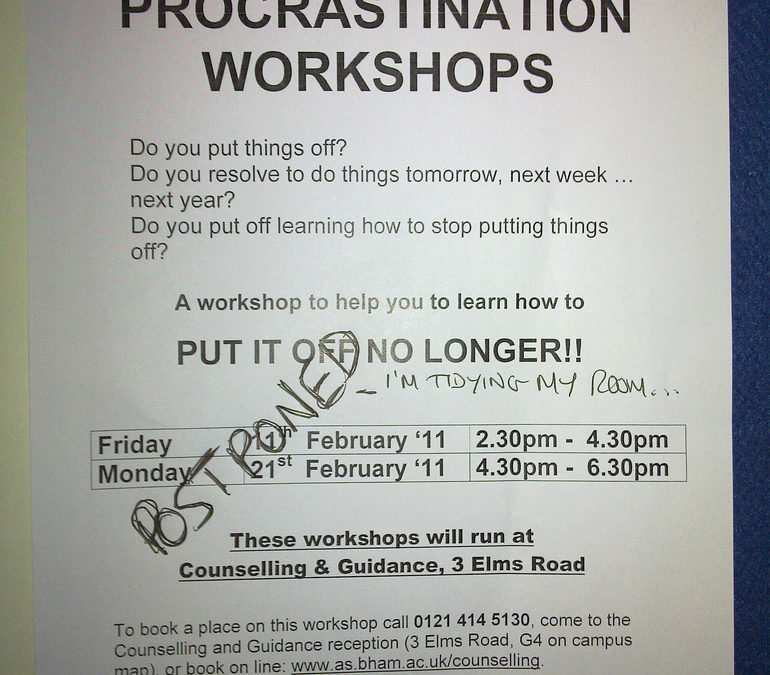
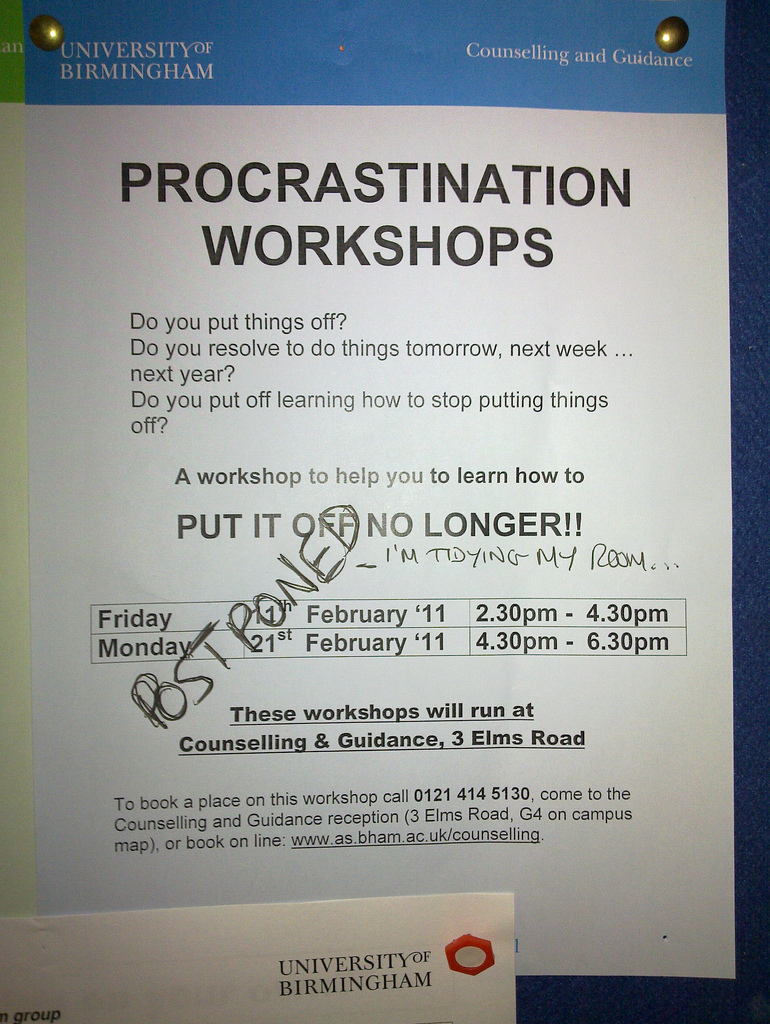
I put lots of projects off until the summer when I will supposedly have more time. My husband works teachers’ hours and has most of the summer off. He enjoys being what I call “The Crazed Cruise Director.” He has lots and lots of plans for us to have lots and lots of fun. And while we all have a good time, every fall I find myself asking what I got accomplished during the summer. The fact is, I need to stop procrastinating, imagining that I’ll be able to do it all come summer.
I see the same procrastination habit in my children. They have to get their school work and chores done during the day, but they typically wait until the last minute when my husband typically announces we are off to do something fun. Again, while we all enjoy our free time, I find myself frustrated that important work isn’t getting done.
Do you put things off until the summer or the end of the day? Do your children? Does procrastination frustrate you like it does me? If so, read on.
While I put things off, I think a lot about why I do. I wrote about procrastination that is based on our dislike for obligations. Anything we have to do, we don’t typically like to do, so we avoid it. I give you some suggestions for coping with this type of procrastination on my Not Wonder Woman blog for Christian women.
But there’s more to understanding and defeating procrastination.
First, we have to address the argument often made that we procrastinate because we work better under pressure.
Not so, say psychologists. Did we really need a psychologist to tell us the truth about our last-minute, panick-stricken work episodes? I think not. Deep down, we know that this way of working is inefficient and just plain stressful. Like any bad habit, I believe it also diminishes our self-esteem.
If we aren’t procrastinating because it’s more effective, why are we? The simplest explanation is that we will always do what is most rewarding now, rather than later. What’s most rewarding now isn’t for your child to do the math worksheet he doesn’t enjoy. What’s most rewarding now isn’t for you to make breakfast for tomorrow. What’s most rewarding now is for your child to run around pretending to be a cowboy and what’s most rewarding now for you is to surf the Web.
The reward we get for not doing the less pleasant work now can create a habit–a bad one.
Second, we have to break the habit of procrastination.
Don’t shame yourself or your child. It’s natural for us to do the most rewarding tasks first. What goes against the grain is building our skills at delayed gratification. Even though it’s challenging, you and your child can break the habit.
Take small steps. The website, tinyhabits, explains how we can be successful in changing our habits by making the changes very, very tiny. You might have your child start by doing just one math problem and you could just decide what to make for breakfast.
Reward them. We develop the habit of procrastination because it’s rewarding. To change the habit, we have to reward our new work behavior. You could congratulate your child or give him a sticker after doing one math problem. You could give yourself a piece of sugar-free gum or put an X on your calendar as a reward. Even an “Atta, girl!” can work wonders.
Make the long-term reward more visible. The reason the allure of playing cowboy is greater than doing a math worksheet is because your child can’t see the positives in being good at math. To help him, you might read from a book like Mathematicians Are People, Too: Stories from the Lives of Great Mathematicians. Or you might simply tell Dad how smart he is getting at math which will enable him to do a special math-related activity with dad (e.g., build something). For yourself, you might read a list of reasons you want breakfast made ahead of time each evening. I use my iPhone to give myself reminders at critical times for habits I want to change. I might use something like, “Remember how nice it will be to have a healthy breakfast already made when you get up.”
With just a little effort, you can break the procrastination habit in you and your child. Don’t postpone it!
How have you been able to break the procrastination habit?
Some homeschooling parents insist that their children have regular bedtimes and get plenty of sleep. Many of these same parents are up late and aren’t giving themselves the benefit of at least seven hours worth of sleep.
Some homeschooling parents don’t have regular bedtimes for their children who often aren’t getting enough sleep. Typically these parents are also sleep-deprived.
If you and your children have regular sleep routines, you are likely to be healthier and more motivated than the rest of us. Just be careful that pride isn’t your downfall. 😉
Why Sleep is So Important to Homeschoolers
My teenage son, who likes to test the limits of sleep deprivation, recently asked me about dreams. He thinks I know way more about psychology than I do and I let him persist in his delusion. I equated dreaming with website maintenance. Websites typically become unavailable while work is being done to enhance their efficiency.
In the same way, we need to sleep so our brains can form new connections based on what we’ve learned. My theory on dreaming is that as the brain works, sorting through the events and emotions of our day, the conscious part of our brains tries to make sense of it all. The result? An often nonsensical dream that we will only recall if we wake up in the middle of it.
Sleep deprivation means that information doesn’t get stored in our memories. It means that our brains and even our bodies will operate less and less efficiently until eventually we have to go offline. We get sick.
decreased perception of ability (students assume they “can’t do it.”)
These behaviors are exactly the opposite of what we want in our students (and ourselves!).
It’s Not How Much, But When
Homeschoolers often feel comfortable keeping erratic sleep schedules because they know their schedules afford them the flexibility to sleep in or make up for sleep deprivation later. However, studies suggest that being able to make up for sleep loss may be a myth. In college, I learned that even more important than the amount of sleep we get is the regularity with which we get it. What’s more, a constantly changing sleep schedule is likely to interfere with your ability to sleep soundly–even when you’re tired.
The summer I did a 12-week Body for Life transformation, I got up at 6 a.m. every morning and went to bed around 11 p.m. each evening. I have never felt more energetic. While I still keep this schedule in general, there are too many days and nights that I vary from it…and I feel it!
And my kids? I’ve mentioned before that my kids are up late and sleep late, but I think we need to be more consistent with bedtime in particular. I hope to motivate my husband to help me by having him read this post and the ones referenced at the end of this post.
Do a Sleep Study
I participated in a Track Your Happiness study using my iPhone. I was able to look at a graph that compared how much sleep I got with my happiness. There wasn’t an obvious relationship. If instead, I had a comparison between my sleep schedule and happiness, I am sure I would have found consistency equaled happiness.
The blog post, Homeschooling and Sleep Deprivation: 8 Things You Should Know, suggests you do a sleep study at home. I love this idea! Have your children help you with a little psychological research. Record the times you and your children go to sleep and wake up and also have them rate themselves on variables you consider important to homeschooling (e.g., attention, cheerfulness, assigned work finished). You may want to rate them, too. I’d like a dollar for every time one of my children has screamed at me that they’re not tired. 🙂 You may want to consider having two experimental conditions: 1) Allowing you and your kids to sleep as they currently do or as they choose 2) Going to bed and getting up at the same times.
When you have the results (I suggest at least a week to gather data), ask your children what conclusions they draw. Is an amount of sleep or a regular sleep time important? If so, what changes do they think should be made with regard to sleep?
I’m a Christian psychologist turned homeschooling mother of six. My life can be a little crazy, so I look for sanity-saving ideas to use and share. I hope you’ll read my About page to learn more.


 , among many other resources. No matter which resources you choose, I believe you can make Bible time a favorite subject by employing principles that have been key to the resources we’ve chosen:
 to get them motivated to expand their biblical knowledge. While I recognize no winners or losers, the quiz aspect appeals to my competitive kids.