I really believe that I have tried absolutely everything to get my kids doing chores thoroughly and independently. I have tried every conceivable chore chart: refrigerator, printed, spur-of-the-moment, elaborate peg boards, computer, iPad, clip-on. My current system is an improvement over the past. However, the main reason chores aren’t as much of a problem today is because my youngest is almost six. Everyone can do every chore (especially with help).
My current system is a simple table created in Word, listing morning and evening chores for each child for each day of the week. Every chore rotates to each child and even to mom or dad. Chores include clearing and wiping the table and counters, unloading the dishwasher, loading the dishwasher, cleaning various bathrooms, taking care of the dog, helping with meals, and picking up various rooms. Chores everyone has to do daily (e.g., make your bed) are not listed on the chart, nor are weekly individual chores (e.g., vacuuming). I use another list for the latter.
People with smaller, non-homeschooling families often marvel at our chore chart which is posted on the refrigerator. I wish they wouldn’t, because frankly our chore chart doesn’t work. Sure, it works better than anything else has, but in my mind, it’s still a complete failure. For example, when it’s my turn to clean the bathroom, it’s clear it hasn’t been cleaned all week, despite cheerful proclamations by my kids that they’ve done it. When it comes to evening chores, we all take turns not doing them. Don’t get me wrong. We have co-op meet in our house each week and lots of company, so our house gets cleaned. But not as quickly or as peacefully as it should be.
I was listening to a promo for Dr. Randy Carlson’s program, Intentional Living, when a mom complained that she couldn’t get her kids to clean their rooms, despite all of her nagging. She said she usually just broke down and cleaned their rooms because it was her house and she wanted it clean. Dr. Randy said (and I’m paraphrasing), “So essentially you’ve trained your kids to believe that they have a really crabby maid.” LOL! Wow, that sounds familiar, only I’ve also trained my kids that they have a really crabby mom. I spend lots of time complaining about the kids not doing their chores or doing them really poorly. Then I become the drill sergeant who insists that they get them done NOW.
So yesterday for the 8,000th time, I sat before the Lord really, really frustrated about chores. Sure, I knew I needed to check their chores. I knew it was all my fault. But knowing this had never solved the problem. In the movie, Courageous, a father tells his pastor, “I just wanna know how to be a good dad.” That’s what I said to the Lord yesterday. Lord, I just want to know how to be a good mom. I really want to solve this chore challenge. If you tell me what to do, I will do it.
Honestly, I expected God to tell me that I was lazy and selfish and I would have agreed! Instead, he surprised me with an insight that has completely changed the way I am approaching chores and character, too! Here it is: Approach chores the same way you approach teaching any other school subject. Well, that seems rather obvious, doesn’t it? But not to me. Whereas, I would never tell my kids how to write an essay once or twice and then expect that they would have it down; and whereas, I would never get mad at my kids for making mistakes in math; and whereas, I would never fail to check my kids’ schoolwork, allowing them to go for days on end without doing their lessons, I was doing all of those things with chores. Being the chore checker was a job I dreaded and resented, while being a teacher is a job I treasure and enjoy. I am now my kids’ chore teacher!
The difference that role change makes for me is huge. I now check my children’s chores because I want to see if they understand what to do, not because it’s one more responsibility on my shoulders. I am praising them for getting so much of it right, rather than criticizing them for what they still don’t know. I am teaching them to make meals to mastery, rather than asking them to do cooking tasks haphazardly. I am also accepting that many of my children are still years away from working completely independently.
What I marvel at is how this huge mental shift occurred as an answer to prayer. What a wonderful teacher is our God, who is so patient and positive with a mom like me. Maybe you need a different approach to the challenge of chores. I know Who you can ask to tutor you.
The wise in heart are called discerning, and gracious words promoteinstruction. (Proverbs 16:21)
I believe that good nutrition is a vital part of being a motivated homeschooler and I bet you do, too. The problem we typically have is that shopping for and preparing healthy meals is time-consuming. Then there’s the issue of dealing with picky palettes. As a fellow traveler on the road to healthier eating, here are some of my motivators that might help you overcome your good eating obstacles:
Ditch denial. Just Google the risks of childhood obesity and you should have a harder time pulling into the fast food drive through today. Read up on the health risks of eating too much sugar and fat and too little fiber and you’ll have an easier time making your way to the kitchen.
Start small. I’ve given extreme eating and cooking a good try and I can tell you it’s not the best approach. Healthy eating doesn’t have to be an all or nothing phenomena. In fact, the most fit and energetic people I know are not food extremists. Making one food from scratch a week that has no preservatives or artificial additives is a great start!
Take time. I won’t lie to you. Healthier eating DOES take more time. But I think it’s well worth the investment. Consider and pray about which areas you could take time from to allow you to provide better meals for you and your family.
Add alternates. Rather than clear your pantry of all the unhealthy foods your family loves, introduce alternatives first. Once the good food is accepted, they’ll have an easy time letting the junk food go.
Request ratings. If you come at your family like a drill sergeant, insisting they give up their favorite foods (or die!), your efforts will be for naught. Instead, help your family feel a part of the process by asking them to rate new recipes. If the majority do not like something, respect them and try something else.
Try teaching. You already know that the best way to learn something is to teach it. Why not study healthier eating with your kids? Use the opportunity to give your kids an education in health, math (measuring), and practical arts (cooking). My kids studied Eat This, Not That for Kids religiously with no prompting from me.
Ease expectations. Even starting small, it’s easy to expect that we ought to be making all our own bread, canning our own veggies, and when we really get crazy we think we ought to be making our own cheeses, too! It’s OK to use some packaged foods and even to choose the lesser of two evils when it comes to eating.
Honor hunger. Because our number one nutritional problem isn’t vitamin deficiency or even pesticide side effects, but being overweight, remember that one of the healthiest things we can do is not overeat. God gave us hunger and satiation so we wouldn’t have to weigh and measure our food. Honor it and you’ll surely be healthier than if you don’t.
Prepare portions. The easier you make it for you and your family to eat healthy meals, the more likely your nutrition will improve. Consider making breakfast for the next day as you prepare dinner. Cut up fruits and veggies after a grocery trip and consider using a fun presentation to make them more palatable to the kids. Double dinners and freeze one. Prepare what you can in advance. For example, brown all your ground beef and freeze it in dinner-size portions for a quick staple during the week.
Enjoy esteem. If you’re anything like me, cooking just seems like a lot of work! What I didn’t realize until recently is that it’s also a great way to get the thanks and praise that so seems lacking in our homeschool. My kids and husband have been singing my praises as I’ve been making new, delicious, and healthier recipes.
Make memories. My mother’s home cooking comprises some of my favorite childhood memories. I doubt that our children will have similar memories of fast food or prepackaged chicken nuggets and fries. As I was writing this post, my son came in and saw my cinnamon rolls and exclaimed, “Those are so awesome!” While they aren’t the healthiest fare (and you wouldn’t want to eat them every day!), they do make wonderful memories.
Want even more healthy eating motivation? Follow me at Wonder Women where I will be regularly posting my food forays.
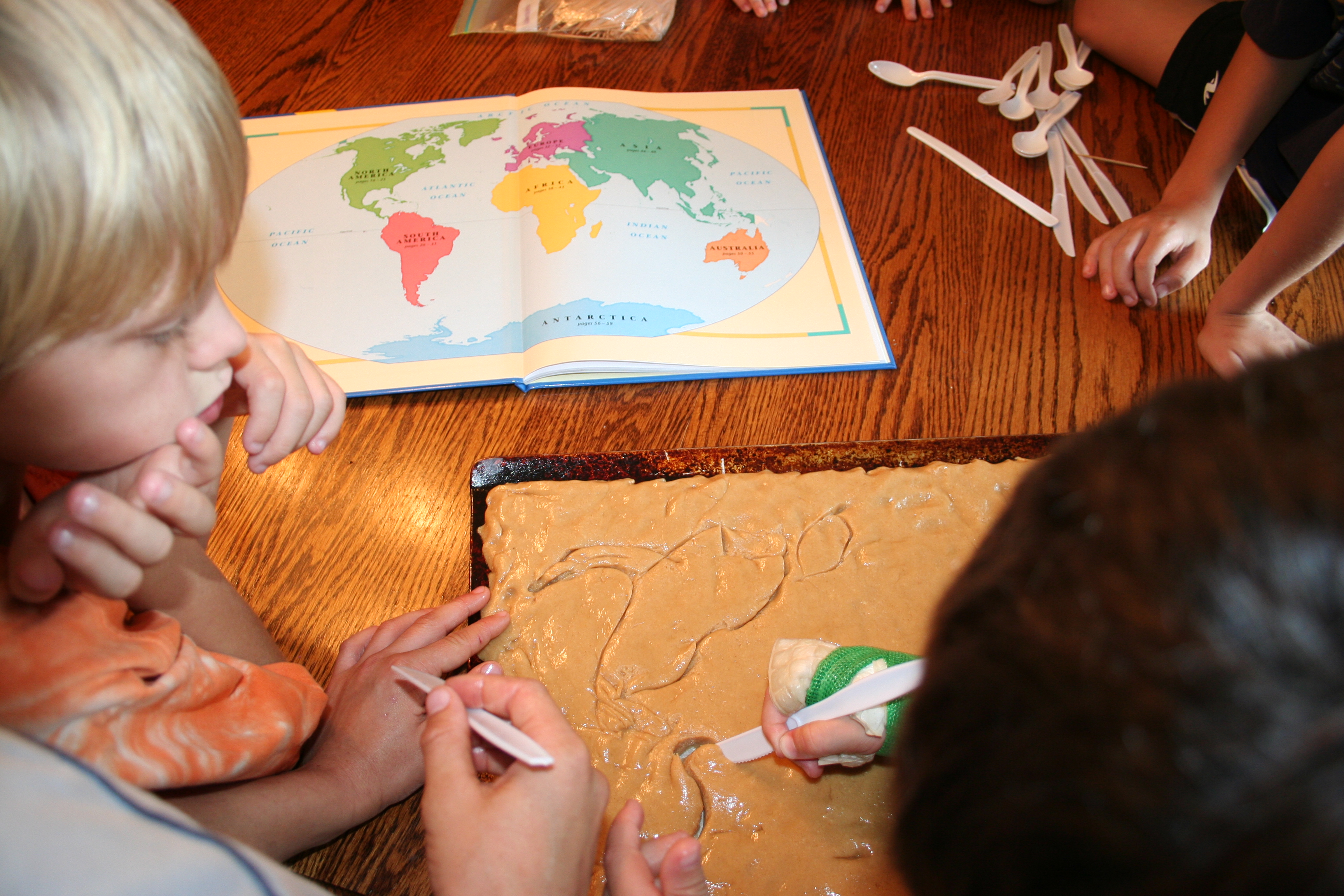
Somehow I don’t think I would have been motivated to re-enact the Revolutionary War on my own. But knowing that I had eight other children on their way to my house to do just that, got me going.
A co-op can be anything from taking turns teaching one another’s children, to formal classes, to families studying together. Here’s why I am a big fan of co-ops to boost motivation:
Accountability. There have been many times that the only reason I made sure we completed a paper or project was because I knew the other families would have it done. I like to teach writing to my friends’ kids because I know that writing won’t get put on the back burner. In the same way, teaching a literature class ensured that I got some classical reading done.
Friendship. Work doesn’t seem like work when you’re with a friend. Having time to talk with my homeschooling mom friends makes the activities worth the effort. The kids seem to feel the same way. What would be objected to outside of co-op is embraced within it.
Breaks. Workplace research demonstrates that rest breaks increase productivity. When I can pass the teaching responsibilities on to a competent friend, I am energized to resume teaching later. I have utilized a friend’s help in being solely responsible for teaching a biology lab co-op and have taken turns being responsible within our unit study co-op.
Numbers. There are some activities (like plays, speeches, and parties, for example) that just don’t seem worth doing with only our family. Sometimes more is better where motivation is concerned.
Memories. My children remember our co-op activities more than anything else they study and why wouldn’t they? We have taken incredible field trips, lived out history, and experimented together. While I love the learning, I treasure the time we have spent with friends who are really more like family.
I started a co-op by advertising for interested moms within our homeschool support group. If you think joining a co-op would make you a motivated homeschooler, start discussing the possibilities with homeschoolers you know.
Next to my Ph.D. in psychology, this book is most responsible for my fascination with how to motivate children to learn. Although certainly not the first voice in asserting that our educational system is broken, nor the first to argue that a classical education is superior, Oliver Van DeMille may be the most influential in insisting that “all education is self-education.”
The most powerful point Mr. DeMille makes is that teaching a child or requiring a child to do lessons that he is not motivated to learn is an exercise in futility. While a student who is mandated to memorize something for a test may be able to give the correct answers when called upon to do so, this student hasn’t really been educated.
If Mr. DeMille is correct, the question then becomes, how can we motivate children to want to learn something for themselves? After all, we worry that our children may never want to learn math as much as they want to learn computer skills, for example. Some of the follow-up books to a TJEd give examples of how to motivate. A mother who wanted her children to learn to ice skate did not just sign them up for lessons as most of us parents are wont to do. Instead, she took them to watch figure skaters several times until the children begged for lessons. The lesson for us as home educators may be that we are trying to feed students who aren’t hungry.
My desire is to have students hungry to learn everything they need to know to fulfill the purposes God has for them. Many homeschoolers are quite interested in the TJEd philosophy and how they might implement it. Here is what it looks like in my home:
Emphasis on classic literature. I agree with Mr. DeMille that classics do more than just develop vocabulary; they can develop character, particularly if they are discussed in reference to a biblical worldview.
Permission for older students to choose their curriculum and study full-time. My oldest son is a perfect example of a student who studies for hours without requiring external motivation. He chooses his subjects and masters them, coming out of his office to share what he’s learning with his dad and me. My oldest is definitely a self-directed leader. However, I think what TJEd doesn’t address is the personality differences that may prohibit this learning style from working with every student. My second oldest desires lots of structure rather than freedom, for example.
Parent education. TJEd suggests that parents study voraciously with a mentor while their children are doing so. While this kind of time commitment would never work for me as a mother of six (nor do I agree that it’s necessary), I have made a commitment to read more classic books along with my children so we can discuss them.
Emphasis on internal motivation. I don’t believe that finding ways to motivate your child means that you have to make everything fun. Some children aren’t as motivated by fun as they are by appreciation, money, or meeting goals. I find it fun, however, to discover what will get each child busy learning. I look forward to sharing many of my discoveries with you here in the future.
Supplementing with early requirements. TJEd like Unschooling in the extreme has nothing to do with workbooks or learning material that the child has no interest in. I, like most homeschoolers, feel uncomfortable with the exclusion of some required learning. I recently read something in our piano curriculum that resolved the tension for me. The author argued that we ought to require our children to learn the basics as children so that the tools are there when their internal motivation takes over. I had my oldest child take piano lessons for several years. He told me he wanted to quit and I had no problem letting him do so. I had asked for the same privilege from my mother as a child. A couple of years later, he became completely enamored with classical music. He told me he wanted to begin taking lessons again. As we tried to arrange that, he began practicing on his own. For hours. He became so skilled at playing that he quit asking about hiring an instructor. Had I not ensured that he had the basic capacity to play as a young child, he would not have been able to fulfill the passion for piano that he has today.
I highly recommend you give a TJEd a read. Even if you do not adopt the entire philosophy, I believe you will come away from reading feeling motivated to continue educating your children at home.
Albert Einstein, Isaac Newton, and Thomas Edison have something in common besides being renowned for their genius: they all struggled in school. Their teachers thought them stupid, but most likely they were distracted by their own divergent thinking. Some of our students will also have a hard time focusing on their studies. What is a homeschool teacher to do?
Limit seat work. I don’t know how young boys survive in a traditional school setting, required to sit quietly at a desk for hours. This isn’t how God designed boys. Their brains have legs and most of them learn best by moving them. Kids who have difficulty with focus should spend more time pursuing their passions and less time in front of a workbook. Use a timer for work that must be done while seated.
Learn what they like to do. Observe what absorbs your child’s attention. Incorporate his interests into your studies. Your son likes video games? Find a library book on the subject, find educational video games, or help him learn how to create his own. Use his favorite activities as rewards for completing the less favorite.
Let them sweat it out. When my kids are having a hard time paying attention, I will have them do jumping jacks, sit ups, or push ups. Lest you think I’m a drill sergeant, you should know that my kids love doing these exercises. I recently purchased some exercise DVDs for kids that I will use for this purpose, too.
Lead them to a private place. Some children’s systems are so easily drawn in by other interesting things, that they need to be isolated for a while. Depending on how creative your child is in being distracted, you may need to sit near her until her work is done. Praise her when she is finished and admit that you also have a hard time staying focused sometimes.
Lecture no more. I can’t tell you how many times I lose my focus while listening to someone lecture. Our children are even less able to focus when there is nothing offered to capture their imaginations. Today’s homeschool teacher has so many incredible mediums for teaching: field trips, videos, audio books, music, drama, crafts, experiments, group exercises, guest teachers, cooking, board and video games, puzzles, puppets and more! The Internet makes the “I’m not creative” excuse invalid. Check out my Pinterest boards for inspiration. When you do have to lecture, stop frequently to ask questions and get kids involved.
Let it go. Strong-willed children can sense when something is overly important to us (like the language arts curriculum we just spent $200 on). They will experiment to see how we will respond if they insist they aren’t going to read that book or do their math lesson. Ever! While disobedience must be dealt with, your child won’t be harmed by taking a break from a subject or especially a curriculum. In the meantime, you may find a better solution that makes you both happy.
Listen for wisdom. Talk to homeschooling friends, other educators, and especially to the Lord about your distracted pupil. No doubt you will get a fresh perspective and will be comforted by tales of kids who couldn’t pay attention, going on to be productive citizens. Often when it comes to what our kids are doing or not doing in school, we can be like Martha, “worried about many things.” I imagine the mothers of Einstein, Newton, and Edison worried about them, too! But when our focus is right, the fear disappears.
Commit your way to the LORD; trust in him and he will do this (Psalm 37:5)
My friend who will be homeschooling in the fall for the first time asked me this question. As that is one of the purposes of this entire site, it isn’t a question I can answer in one post. But I did have some thoughts!
Choose curriculum you love. If you love it, even if it’s not what everyone else is using, your enthusiasm for it will get you out of bed on those cold winter mornings. I plan to share curriculum that has kept me motivated, but for now, if you love what you’re using, you’re on the right track.
Be realistic in your homeschool planning. I told my friend to plan to teach about half of what she thinks she will. I made friends with another new homeschooler when she bemoaned that her 7-year-old son just wasn’t adopting her plan. I had such a good laugh with her about that. Our kids won’t adopt our plans if they aren’t based in reality. It’s not realistic to do every activity, every area of study, or every workbook page in a school year. It isn’t realistic to homeschool from 6 a.m. to 4 p.m. either. I’d like to address this issue more in the future, but the best tip I can give you is to share your schedule and expectations with a veteran homeschooler (preferably one who knows you). If she laughs, you need to modify your plans.
Make it fun in the early years. One of the greatest benefits of homeschooling is not having to adopt institutional learning practices for young children. Some children love traditional workbooks, but many don’t. What my children (and I) remember most are the times we mummified brother, had a family version of the Olympics, and invited Uncle Steve over to share his slides on Africa. I look forward to sharing ideas for making learning fun in future posts.
Let children teach themselves. In recent years I have done more unschooling in the afternoons. As long as it was truly educational (Mario Kart doesn’t count), I let the kids explore their interests. As a result, the kids became origami experts and my 10-year-old shot and uploaded a video teaching kids paper crafts. I can only imagine the reaction I would have gotten had I assigned these projects! Aside from allowing your children to explore on their own, your curriculum plan should include plenty of materials that your kids can use on their own, especially once they are reading.
Take time to recharge. Being a homeschooling mother is the most rewarding thing I’ve ever done, but when I had many young children, it was often the most exhausting and discouraging. I wouldn’t have made it without lots of answered prayer, the listening ear of my husband, the support of other homeschooling moms, and time to regroup. I’ve mentioned previously that at various times during the last 12 years, I have had a housekeeper and a regular babysitter. Having someone thoroughly clean my house once every two weeks made the mess a little less stressful. If you can’t afford hired help, perhaps you could find a friend to clean with. You’ll make quick work of it and you’ll have fun chatting at the same time. I also hired my niece to watch the kids for a few hours one afternoon a week. I used that time to shop without babies and even to have an early date with my husband. The expense was much less than a therapy session. 🙂
Remember that the days are short. I’ve had those days of constant interruptions and sibling bickering that follow sleepless nights when I’ve wondered how I would ever make it. Now I wonder why I ever worried. I look at pictures like the one featured with this post and I gasp at the privilege I have had of teaching these beautiful children. Get out your photo albums or watch a video and you’ll see how far you’ve come. You’ll be motivated to keep teaching. God bless you as you do.
I’m a Christian psychologist turned homeschooling mother of six. My life can be a little crazy, so I look for sanity-saving ideas to use and share. I hope you’ll read my About page to learn more.