One of the biggest challenges we face in homeschooling and life is distraction. There are many obstacles in the path to focusing on what really matters. And ignoring them is quite a challenge. But it’s possible! That’s what I want to share with you in this article.
But before I do, I want to invite you to engage in the distraction of Homeschool Sanity Circle. Yep, it’s on Facebook. But it’s an encouraging, supportive group. Have a question, a problem, or something funny to share? We are there for you.
Before we discuss how to ignore distractions, let’s define them. Distractions are anything unimportant that doesn’t help you achieve your goals in homeschooling. Let me give you an example from my own life. I have a newfound love of fashion after joining Get Your Pretty On. Read more about it here. As I was out for my walk one morning, I thought about adding a fashion section to this blog. Then I had another thought as though the Lord were consulting with me. What’s the end goal for that? Uh, I had no answer. I don’t intend to become a fashion blogger or Instagrammer or to make an income in the area of fashion. While fashion continues to be a fun hobby for me, it could serve as a distraction from my homeschooling and my homeschool business.
Hebrews 12:1 says “…let us throw off everything that hinders and the sin that so easily entangles. And let us run with perseverance the race marked out for us.” When I’m making a decision like whether or not to add a fashion section to my blog, I can lie to myself that I don’t know the race marked out for me. I do know it. I know that time with God, time with my family and teaching them, and time spent creating resources like Grammar Galaxy for homeschooling families is my calling now. That may change later, but right now it’s clear. What is also clear is that I do not have hours of leisure time to devote to another goal. If you don’t know how much time you have to devote to something else, use my schedule worksheet.
When we remind ourselves of our goals in this season and how our time is being allotted, it’s easier to recognize playing online games, watching the news, and scrolling social media for the distractions they are. But what about things like new extracurricular activity, a new job, or new curriculum?
How can we know if these are distractions or part of achieving our goals?
First, use your schedule worksheet to determine if you have time for the new option. If you don’t, what will you eliminate to make room for it? I didn’t have time for fashion blogging and I had no desire to eliminate my podcast to make room for it. You may also benefit from basic tracking of how you spend your time each day. It’s like a monetary budget that keeps you from buying a boat you can’t afford if you’d also like to pay off debt. Be sure to listen to the podcast episode I did on margin. Don’t underestimate the importance of breathing room in your schedule for your physical and mental health. Several people have told me that while they hate the pandemic, they love having a more relaxed schedule.
The second issue to consider with distractions is boredom. Many times, we get tired of the same old, same old and look for something new. In the meantime, we create stress because we add on commitments or get behind because we are spending so much time researching the new and shiny things. If boredom is the issue, make sure you have fun days and breaks planned into your schedule. That will reduce the need for you to look for a fun distraction that can get you off track. Making my afternoons and weekends unscheduled has helped a lot with my boredom. Family outdoor activities have helped, too. I have resumed sharing my daily outfits on Instagram at Psycho_with_style. Wearing a new combination each day is a way of preventing boredom that doesn’t take hours of my time that fashion blogging would.
Finally, are you facing a challenge? When we have a difficult parenting issue or we come to a concept that is difficult in a curriculum, our natural tendency is to escape and focus on something new and easy. The trouble is the problem remains and will eventually give us grief and will have to be addressed. Delaying rarely makes the problem easier. There are aspects of my business and home life that I don’t enjoy. One issue is website management. I’d like to skip that, so thinking about fashion blogging is a great escape. A better strategy is to deal with the challenges head on and get help if you need it. I hired a web designer to create a new website for Grammar Galaxy Books. Now I’m as excited about it as I am about fashion.
When you are tempted by something you know is a distraction from what’s most important to you, consider these tips:
Take a short break. In my 3-hour Caveday Zoom sessions, we take a break after every 45-50 minutes or so. I am amazed by how invigorating the breaks are. But the key is what we do and for how long. In the past, I was using social media as a break. My breaks usually broke my focus and tanked my productivity. Now my breaks are active. We stretch, exercise, talk, leave the room, get a drink, and chat. But the breaks are very short. In no time we are back at it. If your distraction is calling, choose an active break instead and set your timer. When the timer goes off, get back to it until the next break.
Give yourself guilt-free leisure time. If you feel guilty every time you scroll social media, you’re more likely to get stuck there. Instead, have blocks of time or even entire days when you can engage in your distraction without guilt. Most of the time, you’ll be less drawn to it. This principle works well for kids, too.
Imagine how you’ll feel after the distraction. If you give in and start researching a new math curriculum instead of doing the science experiment, how will you feel? In most cases, you’ll be down on yourself for making that choice. This works for other bad habits like snacking when you’re not hungry, too.
Make distractions more difficult. I keep my phone muted and out of sight when I’m in the cave, writing. When I plan to workout first thing in the morning, I wear my workout clothes to bed. I’m less likely to scroll my phone. Turn off your notifications. Use app blockers on your phone or computer. Unsubscribe from emails that are selling you things you don’t need or want. Let your friends and family know when you’re engaging in focused work and shouldn’t be disturbed.
Recognize distractions for what they are. Ask yourself if you are bored or anxious. If you had a friend who was entertaining the same distraction that you are, what would you think? I have struggled with FOMO, fear of missing out. Reading that FOMO is really covetousness in disguise has helped me a great deal.
Finally, meditate on Scripture and pray. Repeat this verse from Hebrews on throwing off everything that hinders. Read the New Testament accounts of Jesus not letting anyone or anything distract Him from what He came to do. Then ask the Lord to give you Jesus’ single-mindedness.
Conclusion
When you identify distractions, use breaks, have guilt-free leisure time, imagine the future, make distractions more difficult, recognize the real reason for the distraction, and meditate and pray, I believe you will overcome distractions in your homeschool.
Soon, we’ll be in a new year. It’s that time when many of us think of goals like getting organized. You know you’re unlikely to organize everything in a year, so what are the most important areas for homeschoolers to focus on? My answer may surprise you.
Organize Your Homeschool Life All Year
Before we jump in, I want to offer you the digital version of my book, the Organized Homeschool Life for just $7! This year, you can organize more than just the most important areas of your homeschooling life. You’ll be given 15-minute missions that will help you in curriculum planning, preparing for seasons and holidays, and special areas like organizing a business or hobby.
So what are the most important areas? I’m going to share six of the most important areas to organize. But here’s a hint. They aren’t your school room, your kitchen, or even your curriculum. What? The heresy!
But I know from experience that if you don’t get these six key areas of your life down, you won’t be able to organize anything else. With them organized, you can tackle any other area easily.
#1 Daily Devotions
The #1 area to organize in your homeschooling life is daily devotions. If you aren’t spending devoted time with God on a regular basis, the risk of operating out of your own strength is high. As a result, you’re more likely to suffer from burnout, depression, and anger.
Yet, it’s so tempting to skip this time. Perhaps you have a baby or early riser at home. Maybe you’re not getting enough sleep. Or you may have no idea how to find quiet time.
I committed to having daily devotions consisting of Bible reading and prayer more than 20 years ago. That was when I read the Bible through for the first time in a year. The Bible I used was called the Change Your Life Daily Bible by Becky Tirabassi and it did change my life.
I didn’t really know God before I made that commitment. I didn’t think He cared about the details of my life. I felt like I was doing life and motherhood on my own.
I’ve read the Bible several times through in different forms since then, and I continue to learn more about God and myself. I know that He really is working all things together for my good. I know that when committed to Him, I can’t fail. How amazing is that?
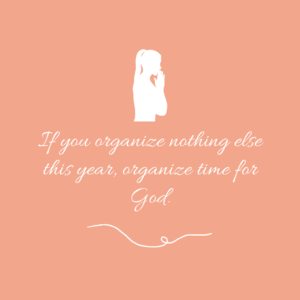
If you organize nothing else this year, organize time for God. You don’t have to spend an hour at 5 a.m. Your time could be right before bed. It could be listening to the Bible and praying while walking. It could be using some of your kids’ nap and quiet time to converse with God. No matter when it is or how long it is, keep pursuing it and ask God to give you a desire for it. Why wouldn’t He answer that prayer?
#2 Daily Routine
The second area to organize in your homeschooling life is a daily routine. A routine, or doing key activities in order, is what allowed me to continue to homeschool and have six children. You can hear more about it by listening to the podcast I did with FLYLady on the topic.
Routines sound boring and confining but the truth is they give you freedom and they can even be fun. A quick cleanup each morning after breakfast was a pivotal part of our routine. I had an upbeat music playlist to listen to as we worked. I also set a timer as we worked on each floor. Sometimes when time was short, I would challenge the kids to see how much we could get done in just one minute. I have had competitions for speed during our clean-up time as well.
Whatever you do to make this part of your routine fun will pay off in your sanity. You’ll have a sense of peace and control as you do the simple tasks that keep your home looking tidy. Starting dinner as part of this routine will make your end of the day so relaxing and rewarding.
Routine is also how I brought order to my homeschooling. The kids knew which subjects we would do in which order, but we weren’t being ruled by the clock. If we wanted to read another chapter, we did. I spent less time on other subjects in this case. I found that alternating fun and difficult subjects or tackling the less desirable subjects in the mornings worked well for us.
#3 To-Do List
The third area to organize in your homeschooling life is your to-do list. If you don’t have a way of tracking and completing non-routine tasks, you’re not going to feel organized. Instead, you’ll feel overwhelmed and forgetful.
At one time, I didn’t use a calendar or to-do list in a consistent way. I missed appointments and deadlines all the time. It was embarrassing and I didn’t know what was wrong with me. The fact is I just hadn’t committed to a system for managing these tasks that worked for my personality.
My life changed when I got an iPhone. I made a rule for myself that every event went on my phone’s calendar. That way I would be reminded an hour before and again a half hour before appointments. I also had a constantly accessible place to put my to-do’s and the grocery items I needed. With voice commands, adding these things to one reliable list is even easier.
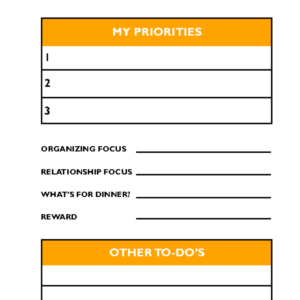
After a year of experimenting, I learned that I consistently do an average of six tasks aside from my routines. In the past, I would make a list of 25 or more tasks to complete in a day. I felt like a failure when I didn’t even make a dent in them. Now I choose just three priority tasks and three other tasks to put on my Organized Homeschool Life daily planner page, and I frequently complete my priority tasks and at least a couple of the others.
#4 Decluttering
The fourth area to organize in your homeschooling life is decluttering. If you aren’t regularly purging your belongings, you will lose money, time, and self-esteem. You already know that having too much stuff makes it very hard to organize. You spend time looking for what you have in the jumbled mess, give up, and buy more. If you have too much stuff that has taken over your house, you won’t feel comfortable practicing the hospitality that we’re called to. Your kids won’t be comfortable inviting friends over. And you might end up featured in an episode of Hoarders.
Letting go of belongings is an emotional process for many of us. I’ve been in tears packing up the preschool curriculum because I don’t need it anymore. But I’ve learned that hanging onto the curriculum doesn’t change anything. My youngest is still 14! What can change things is letting go of belongings we’re not using so we can truly enjoy the things we are. I can relive the joy of the preschool years any time I want by looking at photos and videos. I don’t want to miss this amazing season of homeschooling because I’m looking backward.
Decluttering must become routine. Everyone in the family needs to learn that it’s just what we do–like brushing our teeth and bathing. Create a regular time to declutter in your home.
#5 Chores
The fifth area to organize in your homeschooling life is chores. You can’t do all the cleaning and home maintenance as part of your morning routine. You need to decide how to get the laundry, the lawn mowing, and the dusting done, for example. There are so many ways to manage chores, and I’ve tried most of them. They’re like diets. They all work if you’re consistent with them!
My tip is to change things up when you get bored. But choose something easy as opposed to complex charts and apps. My kids have done their own laundry from an early age. My youngest does the yard work. Lately, my favorite way to get the rest of the chores done is to move through the house, room to room, as a team. I tell this one to dust, that one to move items to the next room, and the other to vacuum. I might clean the windows as we go. This method keeps the kids engaged and it’s lightning fast. It works if you have little ones too. They can pick things up or help you wipe windows.
#6 Relationships
The final area to organize in your homeschooling life is relationships. You don’t see this in other organizing books, but I knew it had to be in mine. If I don’t dedicate time to connect with my kids and husband and solve problems, it doesn’t matter how cute my school room is or how detailed my curriculum plan is. The whole thing can fall apart.
You need a realistic plan for spending quality time with your spouse or for having time with friends and family if you’re single. You also need a way of making sure you’re meeting your child’s emotional and spiritual needs and not just the academic ones.
I found that I would read books about marriage or parenting or I’d go to conferences and be all excited, but I had no plan for taking action on what I knew would make a difference. That’s why I created separate challenges to address marriage and parenting in The Organized Homeschool Life. And it’s why I added a plan for relationship focus to the daily page in The Organized Homeschool Life planner.
How to Organize the Six Most Important Areas This Year
Those are the six priority areas to organize this year.
Some of you will listen and take action with no problem.
Others will need The Organized Homeschool Life book to remind them what to do.
Still others will need the planner to see when they have time to organize these areas during the week and when on specific days. We know that planning a time makes it more likely you’ll complete the task.
Others have good intentions in buying the book and planner, but they need something more. They need a coach and accountability.
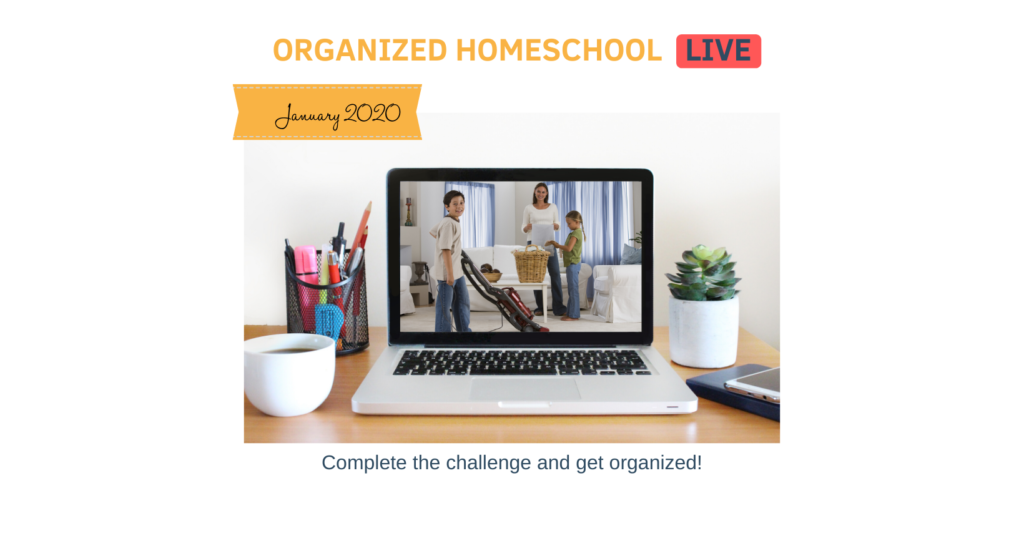
That’s why I’ve created Organized Homeschool LIVE. It’s an online boot camp for Christian homeschool families scheduled for January 3rd, but you can complete the challenge any time.
I’ll give you short, fun assignments to organize the areas I’ve just described and more WITH your kids. You’ll begin the year with a big win! You’ll have experienced what it’s like to have time with God, tidy up with a simple routine, cross off your most important to-do’s, let go of things you don’t need to make room to enjoy those you do, get your house clean in a hurry, and connect with your kids and spouse in a way you’ll want to repeat over and over again.
You’ll check in with our supportive Facebook group and friends you’ve asked to participate with you after you complete each challenge. You’ll find yourself motivated and excited about others’ ideas and successes in getting organized.
The event isn’t a course you buy and probably fail to complete, but an action workshop you’ll be motivated to finish. Your kids will have a blast completing the challenges with you. The low price includes immediate access to the digital PDF version of The Organized Homeschool Life book and planner, so you’ll be able to continue organizing the rest of your homeschool life. You’ll also receive a discount code if you prefer to make a separate purchase of print versions.
Finally, I’ve decided to include a bonus session on the keys to achieving your fitness and nutrition goals this year. I’m a psychologist who has battled these issues and has had victory in the Lord. I can’t wait to tell you about it in this session that won’t be available outside Organized Homeschool LIVE.
If you’d like to start with The Organized Homeschool Life book first but decide you’d like to join us for Organized Homeschool LIVE, I’ll apply your $7 purchase to the ticket price! Tickets are just $47. Click the button below to learn more about this special offer.
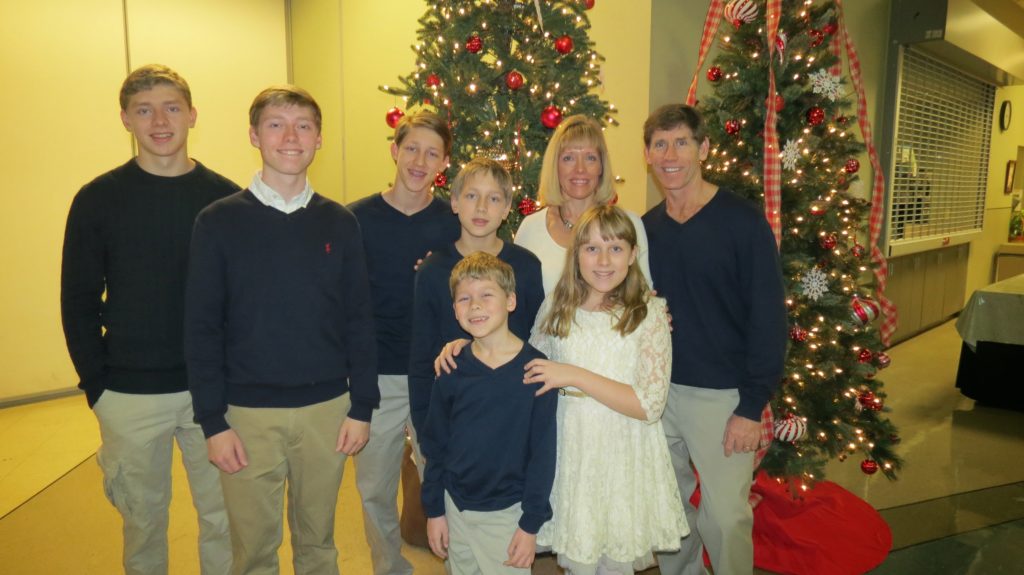
I’m a Christian psychologist turned homeschooling mother of six. My life can be a little crazy, so I look for sanity-saving ideas to use and share. I hope you’ll read my About page to learn more.