I want to do more schooling than usual this summer, but I would like it to be a more relaxed, fun approach–you know, more like it’s supposed to be all year. So today we did some fun science experiments that come free via email and Challenge 1 of www.handbookofnaturestudy.blogspot.com. I really thought it would be a big boring flop but it was amazing! Right in our neighborhood we saw beautiful flowers, a centipede, an uprooted tree, a dead squirrel and bird, mourning doves and a blue jay feather. Looking forward to learning more about the flowers and centipede!
I was motivated to read one of the many books in my collection this morning. I tend to approach books the way I do scrapbooking supplies; I spend more time collecting them than using them! But one particular chapter on the trouble with ‘If’ in Success, Motivation, and the Scriptures really spoke to me. I wonder if (sorry) any of these IFs get in the way of your motivation:
IF my husband were a believer…
IF my family were supportive of homeschooling…
IF my child didn’t have special needs…
IF I didn’t have health problems…
IF we had more money…
IF we lived in a better state for homeschooling…
IF we lived in a suburban area…
IF we lived in the country…
IF we didn’t have a family business…
IF we did have a family business…
IF my children were committed to Christ…
IF I were a morning person…
IF I lived in a bigger house…
IF my husband weren’t a packrat…
IF it all didn’t fall on me…
IF we had more homeschooling friends…
IF I were more organized…
IF I could stick to a schedule…
IF the kids didn’t fight…
IF I didn’t have an only child…
IF I didn’t have so many kids…
IF we had a more reliable car…
IF I had more self-discipline…
I have a lot of these IFs hanging around. If (there it is again) you’ve ever studied geometry or logic, you know to expect a THEN. IF the statement is true, THEN another truth follows. If a, then b. Some of us have never stopped talking about ‘a’, so it’s no wonder we never get beyond ‘b’ (where ‘b’ stands for a bad homeschooling experience).
What if (you try not using that word!) you tried some new IFs like:
IF I trusted God with my husband’s faith…
IF I quit waiting for my family to support me…
IF I explored my child’s potential…
IF I made the most of my healthy days…
IF I asked God to use the money we have…
IF I got involved in state politics…
IF I learned to be content with where we live…
IF I thanked God for the work He’s given me…
IF I spent more time in prayer…
IF I made the most of the traits God gave me…
IF I trained my children to help me…
IF I set out to befriend lonely homeschoolers…
IF today were the last day I had with my kids…
IF I saw staying home as a blessing…
IF I let God run my homeschool and my life…
What THEN? I don’t know! But I like the second batch of IFs a lot better than the first. Today I am going to change my IF of IF we had gotten more school done yesterday to IF we learn a lot of amazing things today…
What ‘IF’ do you want to change in your homeschool?
if my people, who are called by my name, will humble themselves and pray and seek my face and turn from their wicked ways, then will I hear from heaven and will forgive their sin and will heal their land. (2 Chronicles 7:14)
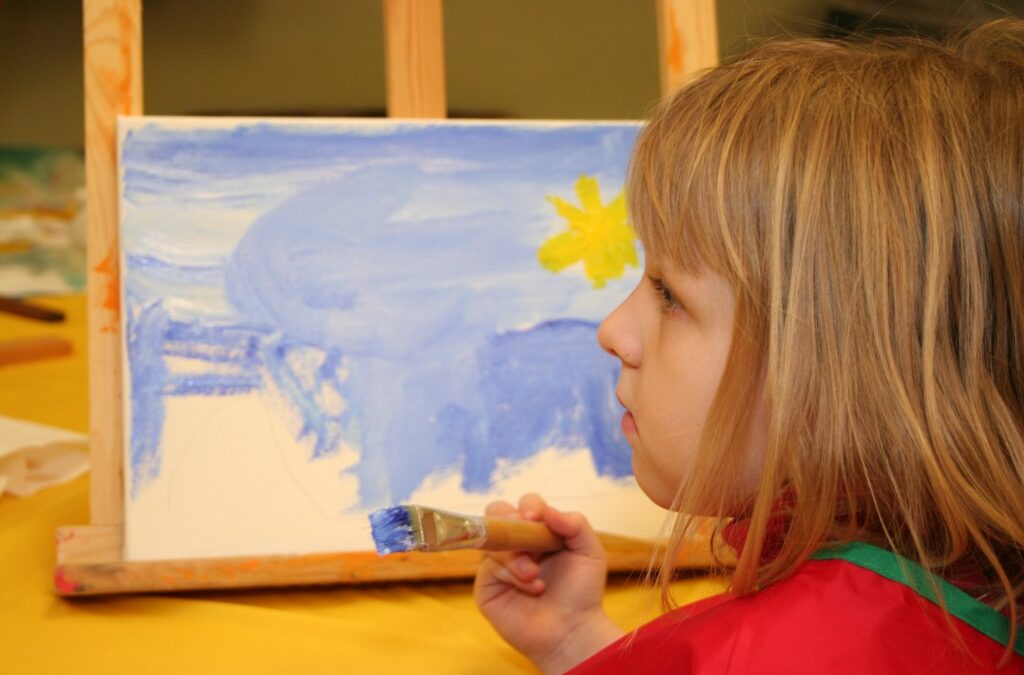
My daughter is motivated to paint. I, on the other hand, am not. What I mean is, I don’t want her to paint.
From the time I had my first little artist, I’ve been a nervous wreck whenever the paints were the educational tool of the day. My desire to have all the beautiful paint colors unsullied together with my insistence that non-paper surfaces remain dry and paint-free have turned me into a terrible art teacher.
Out of guilt, this year I had a “real” art teacher do a painting class for my daughter’s sixth birthday party. I shared with the teacher my angst about the messiness of paint, sure that she would commiserate with me. Instead, she smiled and looked closely at my face as if trying to determine what was wrong with me. She said the mess didn’t bother her a bit. That might be because she doesn’t have children paint in her house! But I digress.
In the course of avoiding art lessons as often as possible, I have unwittingly used a motivational truth to my disadvantage. It is this: limiting a child’s time on a pleasant activity will increase motivation for that activity.
We all know this intuitively, but do not use it to our advantage as often as we might. By avoiding art (and specifically painting), I had my daughter constantly begging me for it. Why does limiting something positive create an even bigger appetite for that something? When we put up the candy, unplug the video games, or turn off the reading light, why do our children cry for more?
You don’t have to be a psychologist to know that one reason is that we perceive anything that is restricted as more valuable. My daughter may surmise that painting must really be fun if Mom doesn’t want her to do it very often. Painting has become a “limited edition” activity for her.
A second reason kids want more of what we say ‘no’ to is our innate rebelliousness. If God hadn’t forbidden the fruit of the knowledge of good and evil, it would have taken Eve a lot longer to be interested in eating it.
I’ve learned how limiting pleasant activities can be used to make life miserable for me, but how can we use this strategy to motivate our kids?
End an activity that you want to encourage BEFORE your child tires of it. If you’re trying out a new math curriculum and junior actually seems interested, insist on quitting while he is still excited. Yep, it’s hard for us homeschoolers to do this, but we’ll be glad we did.
In the same vein, set TIME LIMITS on the activities you want to encourage. Your son may look at you funny when you say to please spend no more than ten minutes doing something that is clearly educational, but do it anyway. If he asks why, say something like, “We can’t spend all our time doing the fun stuff.” Try to do it without laughing.
Limit the activity you want to encourage to JUST ONE CHILD at first. I admit this is sneaky, but here’s how it would work. Show your child who is already enthusiastic about a certain subject the new book, game, or website you have. Make sure your reluctant child is within hearing, so he can benefit from the appreciative comments of his sibling. When he comes over and asks what you’re doing, say something like, “I wanted to show your sister a neat thing she can do for reading/math/science.” Let him ask if he can join in the fun and when he does, be a little reluctant. “I didn’t think you’d be interested in this” or “I got this for your sister, but maybe I could do it with you if you really want to.” If you’re homeschooling an only child, this works beautifully when you have a friend’s child over to play. When I paint with my daughter, all the kids want to paint. I’m going to start hiding.
Use language that clearly indicates the VALUE of the activity you want to encourage. Rather than saying, “It’s time to get to work,” try saying, “Let’s take a break for something new/interesting/fun.” My daughter would never consider painting school “work” even though that’s exactly how I see it!
In another post, I’ll share how we can discourage activities we’d like our children to do less of– like painting. Just kidding.
After returning home from a doubles tennis match that I did not win today, I found myself feeling restless. None of the things that ordinarily satisfy me–talking with family, reading, eating–would do. When I started praying through my www.prayforyou.org prayer list, I realized what was wrong. I needed a win!
Whatever your opinion of competition, recognize that human beings need to feel success is possible or motivation disappears. If I continued to play tennis the way I did today for long enough, right or wrong, I would quit the sport. If our children feel they can’t get a win in their studies, they’ll want to quit, too.
How can we make sure we are running winning schools that motivate?
Regularly praise your child’s progress without any but’s. I am guilty of telling my children I love their writing, artwork, or problems completed and then pointing out what isn’t right. That doesn’t feel like a win. The Suzuki method of teaching is a great antidote to the but-method.
Recognize your child’s achievements. As a homeschooler who isn’t keen on textbooks and testing, I find that the primary recognition I give my kids is a lot of compliments. Those atta-boy’s are great, but some kids may thrive on something most homeschoolers abhor–grades! My children beg me for graded papers. Who’da thunk? What they’re really begging for is a win. Many workbooks include a certificate of achievement, but why not go one step further and give something more prized by your children? Consider repurposing trophies you already own or buy ribbons, medals, pins, stickers, or pencils from a teacher’s supply store.
Consider a friendly competition. My children yawned when I gave them their creative writing assignment. When I told them we would have a contest in which they would have a chance to beat me, the lead started flying. To equalize ability levels, consider having a “Most Improved” showdown. Rotate the types of competitions to give every child a chance to shine. If you’re concerned about individual competition, set a family goal. For a while, I treated my children with a privilege if everyone got their chores completed within a certain time for a week. You could even compete with other families. Don’t limit your thinking to school subjects. You could compete on bedroom cleanliness or charitable funds raised, too.
Give children something to excel in. I just spoke with a homeschooling friend who told me her reluctant reader eagerly read a book while in the car. The book was very easy for him. He bragged, “There was only one word I didn’t know!” Sounds like me when I come home boasting about the number of tennis games I’ve won. Letting your child succeed means eliminating or postponing curriculum that only leads to frustration. Better that the work is too easy than too hard. If your child always comes up short in comparison to siblings, give him or her a personal-best goal to work toward. Remember that these can be time-spent and attitudinal goals, too.
Finally, make sure you have an opportunity to win, too. I don’t know about you, but I haven’t ever been awarded a trophy, a plaque, or a bonus for being a great homeschool teacher. Keeping score in our schools is pretty tough to do. So give yourself an easy-to-achieve goal and plan a reward. Have a competition with a fellow homeschooler. Or find another outlet for your win. I get my “grades” by playing tennis and participating in a writer’s group. If you don’t ever win in your schooling, you’ll be tempted to quit.
In the midst of a dry spell, I like to say that I’m not motivated. But that just isn’t true! I’m motivated all the time and so are you. Unfortunately, we aren’t always motivated to do the best things.
My family recently had the pleasure of visiting the Naval Air Museum in Florida and watching the Blue Angels practice. My ten-year-old son embarrassed his father and me to tears by continuing to drop the flag to the ground rather than raising it high in respect when the planes taxied in. The presence of the crowd intensified our encouragement (yelling) to him to stop dropping the flag while he fidgeted with his socks.
Like typical homeschoolers, my husband and I wondered where we’d gone wrong. Surely we had taught our son the importance of not dragging our country’s flag through the dirt? I determined then and there that we’d be doing a lesson on flag etiquette when we got home. The shame of it all was a huge motivator for me.
Only after the ceremony ended did we realize that our son was motivated, too. He wanted to wave the flag, but something else was eating at him. He had stepped in a fire ant hill and his legs were swarming with the insects. The happy news is a nice couple sitting in front of us who had endured our ego-driven encouragement (yes, the yelling) had everything needed to treat the bites immediately.
The anxiety my husband and I experienced about our parenting and homeschooling during the air show was unfounded. Some of your anxiety is, too. With God’s help, we can get our kids’ education off the ground.
Have you ever been surprised by the real reason your child wasn’t doing what s/he was “supposed” to do?
There are any number of reasons why your child may not be wild about reading:
1) Books he's given are too challenging for him
2) The material doesn't interest him
3) She might have a learning disability like dyslexia
4) Not enough reading role models
5) She's an auditory learner
6) Other options for entertainment are too easily accessible (e.g., video games)
7) He is anxious about it, possibly because Mom or Dad is, too
Whatever the reason for his reluctance, it's a good idea to take a relaxed approach to trying several different approaches to encouraging reading. I have two websites for you and your child to check out. The first is a great one for kids at the very beginning of their reading journey: Starfall. Your child can brush up on phonics and take the focus off her performance by rating the stories she reads. It's completely free!
The second website is from Disney. It offers 600 titles from picture to chapter books. Books can be read to your child or unknown words can be touched and read to them. A dictionary can quickly be accessed, too. Kids love the realistic turning pages. The most innovative part of the program is the intermittent (and unexpected) quizzes that test comprehension and award points. Get a free week trial here without giving your credit card! If you love it, up to three children can read as many books as they'd like for $8.95/month. Very reasonable in my opinion! And nope, I don't get anything for sending you there.
I’m a Christian psychologist turned homeschooling mother of six. My life can be a little crazy, so I look for sanity-saving ideas to use and share. I hope you’ll read my About page to learn more.