Do Covey’s Quadrants Help You Get More Done?
from SidSavara.com
This is Week 2 of A Year of Living Productively
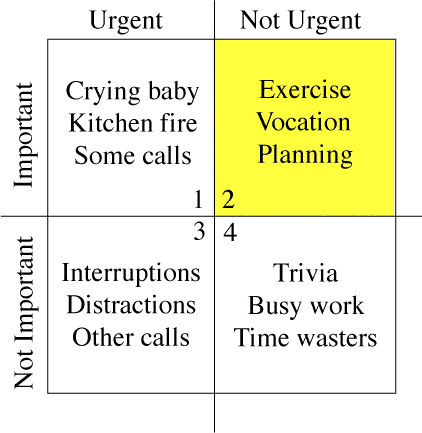
I wanted to know if categorizing my tasks by importance and urgency using Stephen Covey’s matrix from First Things First would increase my productivity. I chose to create labels for each quadrant using IQTell. I spent quite a bit of time assigning my tasks to these categories and here’s what I discovered about this productivity philosophy.
How Covey’s Quadrants Saved My Sanity This Week
I know I already understand what’s important and I do important things. I had about twice the amount of important and non-urgent tasks as I did important and urgent tasks. I don’t think that’s because I am not spending enough time in Quadrant II, however. I am with my children, and to a significant extent, my husband all day. Next to my time set apart for devotions, they are my top priority. The tasks in Quadrant II are generally related to writing and organizing. There are just a LOT of things I should get around to doing in those areas. And I do spend a lot of time doing them. All of that to say, knowing what’s important in your life is paramount to choosing tasks. Committing to spending time doing those important, non-urgent tasks is also vital. I have both of those down, but there are problems using this philosophy as your only productivity method.
How Covey’s Quadrants Made Me Crazy This Week
I already have my tasks tagged for priority. The Important/Urgent tasks correspond to my must-do tasks with due dates. The Important/Not Urgent tasks correspond to my should-do tasks with no or longer-term due dates. The labels added nothing new.
I was overwhelmed. Using only the categories to work from, I had 40 important/urgent tasks and 80 important/non-urgent tasks. As opposed to last week when I tested paper and felt motivated, this week I didn’t want to do anything.
I don’t put unimportant tasks in my task list. I don’t write down “surf the web” or “spend an hour on Facebook.” I just DO those things. The matrix had no effect on whether or not I engaged in certain activities.
Importance is confusing. Even the activities that most people would label unimportant may have been important to me at the time. Didn’t I learn something and relax after a busy day? Social media is important to me, whereas it isn’t to other people.
Did Covey’s Quadrants Help Me Get More Done?
Unequivocally, NO. My productivity took a nosedive. Was that because I didn’t use paper? I’m certainly willing to entertain that possibility and plan to test other paper approaches this year. For me, though, Covey’s quadrants are more of a philosophical approach to tasks that have nothing to do with how much you do–even important things.
**Update**
While I don’t organize my tasks in a task list by priority, I have a new appreciation for focusing on the important, but not urgent tasks. My current approach is to schedule these types of tasks as early in the day as possible so I get to them.
The Productivity Approach I’ll Be Using for Week 3
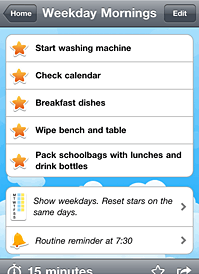
I was reading Blog at Home Mom this week and author, Christin Slade reminded me that when I abandon routines, my productivity and my life suffer–even though I tell myself I’ll be fine. FLYLady‘s routines were the very first productivity approach I used. Before I found her, I did things willy-nilly. Even when I put things on a calendar, I wouldn’t check it before I started my day. Dishes, laundry, cleaning were done “whenever.” So profound were the changes in me after adopting routines, that I wrote an article about it for Woman’s Day magazine, began speaking about it, and was inspired to write So You’re Not Wonder Woman?
 .
.
My original routines were written in a notebook. When I got an iPhone and the HomeRoutines app came out, I gave it a try. I really liked it. I added more steps to my routines that I thought would help me get more important things done. The only problem I had was feeling bad if I didn’t do every single part of my routines. I quit because of my perfectionism. But I’d like to try it again with a new attitude. This time, if I do any part of a routine step, I will give myself credit. AND my goal will be to do half of my routines. If I do half of them, I will be doing considerably more than I’m doing now.
If you’d like to join me for a week, here’s what you do. Make a simple evening and morning routine on paper. If you want to go hog wild and have a school/work and/or afternoon routine, I can hardly say no. But I think you’ll have better luck sticking with short morning and evening routines. The HomeRoutines app is $4.99, but I’m not encouraging you to buy it until you determine that you like working with routines. Include steps in your routines that will help you organize your tasks and will help you feel on top of things. Loading the dishwasher each evening was a huge step forward for me. If you already do things every evening and morning, add a couple of new tasks to each routine. Make them as small or as broad as you need to (i.e., load dishwasher or clean up kitchen). I would list my routines for you, but I’m pretty sure you’d freak out. I’m psycho, remember?
To see how my work using home routines went, click here.
A Year of Living Productively
read more