Most homeschoolers rely on their computers. We use them for:
curriculum
research
creating
communicating
worship (I play a family worship CD on our computer)
and much more…
The problem is neglecting our computers until they give us fits.
This week’s challenge is all about making sure they work for our homeschools and not against them.
#1 Create a Safety Plan
We took steps to keep our photos and videos safe during the Memory Keeping Challenge. This week, we will take steps to protect our other valuable files: documents, records, music, contacts, and more.
Fortunately, most computer programs have automatic backups these days. Unfortunately, some programs require you to indicate that you want automatic backup ON in your settings. Never assume that your files are being backed up — that goes for your mobile devices as well. Take a few minutes to make sure they will be there if your computer isn’t.
Determine how to back up files. I prefer to have files backed up online. I use Dropbox for many different kinds of files. If you’re comfortable with your files being backed up online, add at least one more level of safety. My huge list of Gmail contacts became corrupted. I hadn’t made a backup of them. Never trust an online account to be your only backup of vital information. You may want to consider an external hard drive (or two) as a backup.
Make sure your security software is up to date. Anyone who’s had a computer completely destroyed by viruses (me!) will tell you that it pays to download the latest version of your software program of choice.
Create a safety plan for your kids. There are many excellent methods of limiting kids’ exposure to online predators and pornography. I’ve reviewed many of them. But I believe the most effective method is educating our children.
Explain to kids that there are unscrupulous people who would like to exploit their natural curiosity and desire for relationships. Clicking on an ad or sharing personal information can lead to unintended problems. It’s really important to tell children that if they do come across pornographic material or give personal information to a stranger, that you will NOT be angry with them. Instead, you want them to tell you, so you can prevent the incident from becoming a serious problem.
Of course, this kind of education should be ongoing with information and discussions taking place when children reach a new stage of development. This video addresses internet safety in general.
#2 Maximize Performance
You need all your patience to teach and parent; you can’t afford to deal with a slow computer, too.
If you have a slow internet connection, spend some time researching an economical option. And don’t be afraid to pray! We had problems with our network for months until a friend at church, who works for our internet company, saw my Facebook update about it. He sent someone out who finally determined and fixed the problem.
Educate the kids not to agree to download extra adware when getting games or software online. This has been a primary cause of slowness on our PCs.
A messy computer desktop can be just as overwhelming as a cluttered work space. If you’re using a PC, you don’t really need those program icons. Deleting them shouldn’t delete your programs, which can be run from the task bar or start menu. Everything in its place applies to computers, too.
The quickest way to clean your desktop is to create a folder and label it archive. Drag everything into it that you think you may need and go through it later when you have a folder system set up. Mark Hurst describes this approach in his free Kindle book, Bit Literacy .
Use a desktop wallpaper. IHeartOrganizing shares a file-naming strategy and pretty desktop wallpaper (just a photo that you set as your desktop) that you can use for organizing files you’re actively working with.
#4 Declutter Unneeded Files
Take 15 minutes and delete files you don’t need. To make this practice easier in the future, consider having a “To Delete” file. I often download files I know I won’t need later to this folder.
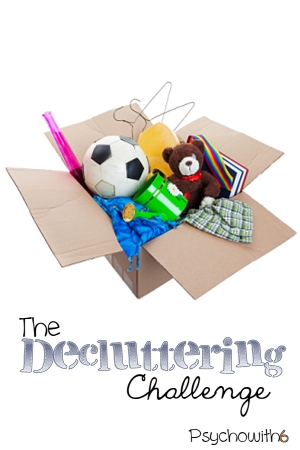
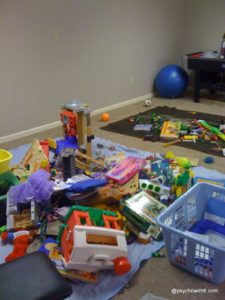
As homeschoolers, we can find it difficult to minimize the collection of stuff. Here are a few reasons why:
Books are often our greatest treasure; we can’t imagine giving them away
We may have more than one child or might have, so we figure we will need the toys, the clothing, and the curriculum again soon
We need to save two-liter bottles, empty milk containers, and toilet paper rolls for those experiments and crafts that use “what you have on hand”
We may do unit studies and could use just about anything as a prop or costume
We don’t want to waste money living on a single income or just to be good stewards
Although we can come up with good reasons to keep our stuff, there are also good reasons to get rid of it:
If we keep buying bookshelves, we will have to buy a larger house
Organizing hand-me-downs can be very time-consuming
If we save too many recyclables, we might start thinking that having 20 cats is normal, too
It’s no use saving so many things to use for unit studies if we can’t find them
Clutter can cost us emotionally, socially, financially, and spiritually
We can’t clear years’ worth of clutter in a week, but we can get a good start on it. This week:
#1 Make a List of All Gifts Received for Christmas
I receive a few gifts for Christmas, but I buy most of my clothing and other items I need at the end of the year because of sales. If I don’t declutter as much as I take in, it won’t take long for me to look like a hoarder. The same goes for the kids.
Enough time has gone by that it will be an interesting exercise to have your children make a list of everything they’ve gotten during the Christmas season. I’m providing a form for subscribers for this purpose. If they can’t remember, what does that tell them about the real value of things?
#2 Collect Items to Declutter Based on Your Gifts Received List
The idea is to do a one-in, one-out exchange. If you got a new sweater, an old one is decluttered. If the kids got a new game, an old one is given away. If you can’t do that for some reason, just declutter any item in exchange for the new one received.
I had a very difficult time with this where the kids were concerned for many years. One child would get a toy as a gift and everyone played with it. This is great until it comes time to declutter. The teen no longer cared about the younger kids’ stuff, so he would want to declutter it, much to his siblings’ dismay.
I now lay two blankets on the floor when we are decluttering kid stuff. One blanket is for anything any child wants to give away. The other is for trash. The kids enjoy going through their stash of toys and games and putting items on the blankets. As a child sees something on the blanket he wants to keep, he rescues it and returns it to storage. As the process continues, he may change his mind and return it to the giveaway pile, however. Sometimes kids are ready to release things when they feel free to choose. I may also rescue items from the blanket that I want to sell or keep for grandchildren (I’ve changed my mind about many of these latter items with my husband’s encouragement.)
#3 Put Unwanted Books/Curriculum Aside or List for Sale
Once, when I had more books than bookcases, I went through boxes of books while on the phone with a friend. I would explain to her why I was keeping each book. It wasn’t long before I realized that I didn’t need to be everyone’s library. So much of the time I was keeping books in case someone wanted to borrow them. I encourage you to ask yourself why you’re keeping books and release those that hold no interest, no sentimental value, or will not be read again.
Can we talk about releasing curriculum now? It’s tough to admit you spent hundreds on something you hate or that your kids will never be cute little kindergartners again, but you’ll have so much more peace in your homeschool when it’s out of sight. If you declutter something you end up wanting again, you can always buy it (or borrow it) again.
At this point in the school year, you know which materials you purchased that just aren’t working. Box them up to sell at spring or summer used book sales or list them for sale now. Check out my post on the best places to sell used curriculum.
#4 Deliver Unwanted Items to Charity, Consignment, or the Post Office
Unless you’ve determined that later in the year is a better time to offload your unwanted items, do yourself a favor and send them to a new home as soon as possible.
In our area, many charities will pick up donations. I usually prefer to free up space by sending my husband to the drop-off location (which he gladly does).
My favorite resource for decluttering inspiration is FLYLady.net or her book, Sink Reflections. My one claim to fame is that I have a blurb on the back.
Everyone has the challenge of keeping photos, video, and other memorabilia organized, but for homeschoolers, it’s an even more important undertaking.
These memories may be used as part of our homeschool record keeping. We may not have yearly photos or a yearbook to rely on. We may have many children or many activities to document. When you add in memories that predate our homeschooling to the to-do list, it can be easy to feel overwhelmed.
But the goal of having memories in a form that can be enjoyed now and in the future is a worthy one. So where do we begin?
#1 Discuss and Choose a Method for Organizing Memories
Today we have many options for keeping photos, videos, and even memorabilia organized and accessible. That’s the good news. The bad news it can be harder than ever to decide the best way to keep your memories. Talk with your family about the method they prefer.
Keeping Memories in Acid-Free Organizers
Many experts recommend having prints made of your best photographs, rather than relying on digital media that may fail. Even if you prefer not to get prints, you likely have a number of older photos that haven’t been safely organized. If that’s the case, I recommend a Cropper Hopper Photo Case which can hold up to 2000 photos. I have a number of these cases and use them to organize my photos by topic. This method has allowed me to find old photos quickly.
Displaying memories can be creating a detailed scrapbook, slipping photos into an album, or doing Project Life (my current fave) which is somewhere in-between.
You may decide that keeping your photos in a digital format is the best choice for you. I recommend Eye-Fi cards for automatic photo uploading. I also love that my iPhone automatically backs up my photos to Google+.
Would you like to have all your photos and videos in digital format? You can convert them at home with a scanner or a video capture device. Or you can pay for conversion through a service like FotoBridge. You can also shoot photos and video of bulky memorabilia that you don’t want to hold onto.
We display our digital photos on our kitchen iMac’s screensaver, but digital photo frames are another option.
#2 Purchase Materials & Move Memories to a Safe Place
You’ll want to purchase any materials or services necessary to help you preserve your memories (see the links above), but don’t wait to move your memories to a safe place.
At one time, I had photos in the basement. The basement is the most likely place to experience water damage, so I moved them to the main floor. Memorabilia should also be kept away from sunlight. Choose acid-free containers rather than shoe boxes. As soon as possible, plan to safely remove photos from magnetic albums that aren’t acid-free.
Digital memories must also be kept safe. I keep my photos and videos on multiple external hard drives as well as on a computer and in online storage. If you don’t have a system for backing up these memories, set one up today.
#3 Begin Documenting 2013 With Help
If you don’t know where to start, begin by documenting the past year. Collect photos and videos into folders by months. One of my favorite quick ways to document a year is by creating a calendar. Shutterfly offers a number of options for doing this. If you choose a 12×12 calendar, you can store the pages in a scrapbook when the year is over. This is a perfect project for kids, too. Even if all you do is organize the past year’s digital photos and videos by putting them into folders, you’ll be a lot more organized.
#4 Choose a Top Priority Project and How to Complete It
Besides organizing memories from the previous year, choose another project that you’re motivated to complete. I have a son who is graduating from high school this May, so completing his school years scrapbook is a top priority. You may have an event that you’d like to make special by having memories on display.
Decide together what to tackle first and then determine how everyone can help. Young children can slide photos into a book. Older kids can learn to edit videos.
Want more help organizing your photos? Organized Photos is my favorite website.
I would love to hear what your top priority is for memory keeping.
I don’t know any homeschoolers who don’t have a lot to do.
Cooking, housekeeping, kids’ activities, church and homeschool group responsibilities, and outside work on top of parenting and teaching can keep you really, really busy.
No matter what your situation, you have a lot of tasks to manage–possibly more than you’ve had at any time in your life. If you haven’t found a way of managing your workload efficiently, your tasks may get in the way of your homeschooling.
This week we will focus on managing our to-do’s so they don’t manage us.
Want to watch this challenge on video instead? Scroll to the bottom.
Your Challenge for This Week
#1 Discuss task approaches and choose one to try
All work is managed with a to-do list, whether that list is in your head, on your calendar, or in a fancy app. But just as with curriculum, there are many, many kinds of to-do lists for many different kinds of homeschoolers.
Older children can (and probably should) be included in a discussion of managing tasks. They will be managing to-do’s on their own soon and teaching them how is a wonderful life skill. However, they may want to use a different approach than mom or dad because they have different personalities and workloads. The best approach to try is one that isn’t wildly different than what you’re doing now.
#2 Acquire the materials you need and set them up.
If you’re going to use a notebook and a pen or your calendar, you’re good to go. But if you want a new planner or an app, for example, you’ll need to get them and prep them for use. If you are going to use forms you download, you’ll need to print, copy, and probably 3-hole punch them.
Think about how you will use your approach when you’re away from home. Do you need a small notebook / datebook for your purse? Should you download an app for your phone? How will you make sure that tasks don’t fall through the cracks?
#3 Add a small number of tasks to your list and work on them.
Getting Things Done emphasizes the importance of adding absolutely everything you need or want to do to your list and later deciding that some of the tasks are someday/maybe tasks. Most homeschoolers could come up with thousands of tasks in no time, quickly producing overwhelm.
Whatever approach or list type you use, I recommend against adding every conceivable thing to your list right now. First, look at the upcoming quarter. Is there anything you need to start working on now? Second, look at the upcoming month. If you need to get started on something that is due in the next 30 days, add it to your list. At this point, don’t add things that you’d just like to do, but actually need to. You can add the want-to’s to your list as you find your managing your must-do’s. Third, add tasks that you have to complete this week. Finally, add things you need to get done today.
This may be the one list you work from every day or it may be the main list that you use to create a short list of tasks you want to accomplish today. Remember, that if you have a routine, you don’t have to add regular occurring tasks to your list.
#4 Continue working on your tasks and discuss your likes and dislikes.
I really enjoy buying planners, apps, and pens as well as spending time setting up new systems. That’s why I wrote a year-long series on living productively. But the point of this week’s challenge is to get more of your tasks done, so we have to get busy! Keep working on managing your to-do’s and take time to regularly discuss what’s working and what’s not.
I would love to hear about what you’re trying and whether it’s working for you. Discussing the pros and cons of your task management approach helps you remember that you’re not failing. You just need to keep working out a way to get things done that works for you–even if that means having to change it up frequently so you don’t get bored.
There is no more powerful habit for an organized homeschool than devotional time. We won’t find the peace we want in a pretty bin, but in a relationship with the Prince of Peace.
Personal Devotions
I did not devote time to prayer and Bible reading until I was very pregnant with my second son. At that time, I attended a Becky Tirabassi seminar as part of a Women of Faith conference. Becky told story after story of answered prayer and beseeched us to make an “appointment with the King” every day.
At the time, sad to say, I was on staff at my church, but had never read the entire Bible. When Becky asked anyone who was fully committed to keeping that important appointment, to stand up, I did. I bought Becky’s Change Your Life Daily Bible and her My Partner Prayer Notebook and I was on a personal mission. (Becky shares her philosophy in Let Prayer Change Your Life.) I was so motivated to read the Bible through in a year that I even did my reading and prayer time in the hospital after giving birth. I don’t remember anything I read, but I kept my appointment!
Couple Devotions
I made time for personal devotions that did change my life, but I made a big mistake. I didn’t include my husband in the process. He felt left out of my new habit of Scripture reading and devoted time to prayer. He felt better when I bought him his own Daily Bible. We have changed Bibles since then, but we continue to have a shared habit of reading Scripture in the morning.
Christian homeschoolers usually do a great job of teaching the Bible as a part of their curriculum. In our busy lives, it can be harder to find time to pray and read Scripture as a family. We’ve been inconsistent over the years in using formal programs that require supplies for fun activities and more successful reading missionary biographies in the evenings or doing a short devotion in the mornings. My husband will read Scripture and then lead discussion of it, use a regular devotional book, or will join us for our school Bible time. He is not one who likes to be locked into doing the same thing at the same time. We have used Character Building for Families the most consistently because it’s short, meaty, and requires no preparation.
The most powerful family prayer time approach we have used is to each pray about something we are thankful for, something we are sorry for, and something we need help with. We have really been able to feel in touch with our kids’ hearts. Many times I have been upset about something the kids have done earlier in the day, only to be moved by their confession of it in prayer and their request for help from the Holy Spirit to avoid a similar error.
Yet another family devotional practice that has been meaningful for us is to save Christmas cards and pray over a few of them each day. We have the opportunity to share with the children more about family and friends they haven’t met or don’t know well, and to experience answers to prayer, too. We often hear from the prayed-for family soon after we’ve lifted them up to the Lord.
Your Challenge for This Week
#1 Establish a time, place, and an approach to personal devotions
You don’t have to find the perfect time and place, but decide on a time when you are most likely to be able to meet with the Lord undisturbed during this season of your life. Now that I don’t have babies, I have personal devotions in the morning before the kids are up. I get comfortable in a recliner with a great reading light. In the winter, I snuggle under a faux fur blanket. I often have something to drink as well. I want my time with the Lord to be the most appealing part of my day.
In years past, I have had devotional times before bed, in the middle of the night while nursing, and at lunch time. I’ve been in bed, on the couch, and even in my car to connect with God. The time and place that make devotions consistent is what you should choose — not what someone else is doing.
I am currently reading through the Bible using the John MacArthur study Bible, read a variety of daily devotionals (both print and digital) as I feel led, and use Pocket Prayer Pro to organize my prayer time. I’ve changed how I spend this time with God many, many times. The ingredients that I feel are essential are prayer and reading Scripture. I have enjoyed using organized prayer calendars for my husband, children, extended family, and pastors. When I am going through a challenging time, I have been greatly blessed by Streams in the Desert. Before you buy something new, see what you have that haven’t read and just start.
Remember that if your devotions get interrupted, the Lord Himself has allowed it.
#2 Establish a time, place, and an approach to couple devotions.
Talk and pray with your spouse about the best way to spend time with the Lord together. Could you pray together in the morning, on the phone over lunch, or before bed? Would you like to use an organized prayer calendar or a couples devotion? Would you like to read through Scripture together and discuss it? Again, you may already own materials that you could use. Allow your spouse to lead in choosing the approach that is most comfortable for him.
#3 Establish a time, place, and an approach to family devotions.
Connecting family devotions to established routines is most likely to be effective. Could you pray and read Scripture at meal times? Perhaps bedtime is a better option. If you’d like to do devotions that require pre-planning, when could this planning be done and who could be responsible for it? Pray for wisdom about this. The most important thing is to cover the process with grace and be willing to make adjustments until you find what works for your family.
Be sure to share what works for you and your family. You can inspire others with similar situations.
If you’re anything like me, you find dozens of great ideas you could use to get and stay organized in your homeschooling and life. The problem is overwhelm! Where do you start? It often feels like you aren’t organized enough to get organized.
I’ve been there. In fact, when I gave homeschooling a try by teaching preschool 14 years ago, I was convinced I had to quit because I was so disorganized.
I was constantly forgetting appointments
I couldn’t find anything
The laundry piled up
I didn’t follow through with my curriculum
The stress made me short-tempered with the kids
Little did I know that homeschooling was the perfect remedy for a disorganized mom like me. I saw how incapable I was of doing what God had called me to do. It didn’t happen overnight, but today people consider me an organized person.
I’ve come a long way, but I still seek ways to make our homeschooling, home life, and work function as efficiently as possible. I’ve noticed that there aren’t a lot of organizing missions tailored to families who homeschool, and that’s too bad. We have specific organizing needs.
If you can relate, I invite you to join me for a year’s worth of challenges that will help us get organized enough to do all God has called us to do.
On Mondays, you can read the post, then do one 15-minute mission each remaining weekday, do an hour session over the weekend, or anything in between. One thing I forbid you to do is beat yourself up for not doing every mission. I’m telling you right now that I’m not going to do every single mission as scheduled! There are more important things in life than organization.
But if we do even a few of these missions this year, we will have a better homeschool than we had last year! That’s something to be excited about.
Please also follow the Organized Homeschool board on Pinterest for up-to-date great ideas for each challenge. Be sure to tell your friends about the challenge, too. Getting organized is always more fun with friends. If you haven’t already heard it, I invite you to listen to the Easy Way to Get Organized podcast on The Homeschool Sanity Show. I share ideas for how to get the most out of this challenge and share my fellow homeschoolers’ and podcasters’ best organizing tips.
I’m looking forward to getting organized with you this year!
Please share your organizing progress, tips, or related blog posts in the comments or on Facebook.
I’m a Christian psychologist turned homeschooling mother of six. My life can be a little crazy, so I look for sanity-saving ideas to use and share. I hope you’ll read my About page to learn more.


 Most homeschoolers rely on their computers. We use them for: