When I first got serious about getting my children’s help with housework, I was most interested in them learning responsibility. Now I can’t keep our home running without my kids. Take the chore challenge and your whole family will benefit for years to come.
#1 Determine the chores that have to be done each week
I recommend you limit your list to the absolute musts. Washing the baseboards isn’t a weekly must, for example.
The easiest way to do this is to ask yourself what you want done morning and evening. To get you started, here are the chores we do both morning and evening:
Clear and wipe table and counters
Load dishwasher
Wash dishes that don’t go into the dishwasher
Sweep kitchen and clear window seat
Pick up play room
Pick up school room
The kids do one additional chore each in the mornings in addition to their bedroom and joint bathroom.
Weekly chores in our home include dusting, vaccuuming, Swiffering, mowing (in season), and emptying garbage (and replacing can liners–you can’t forget that!). The kids (ages 8 and up) are responsible for doing their own laundry on their assigned day.
#2 Assign chores to each child
Consult a list of age-appropriate chores like this one and discuss with your children which chores they are interested in learning. My children are now old enough that all of them are capable of doing any daily chore. When I rotated chores when the kids were younger, I helped the littlest do their chore if it was too much for them.
In our house, one child keeps the same weekly chore until he has matured to the next level. The youngest Swiffers while the oldest mows, for example. However, I recently demoted a child because he consistently failed to dust well. He is happier managing garbage and I am happier having the dusting done! This was a decision reached through family discussion.
#3 Choose a chore management system and set it up
I think I’ve tried just about every approach to chores there is. Everything has worked for a while, but then we get tired of it. The key for my family seems to be variety.
Our current approach for daily chores is a colored index card system. The kids draw cards to see what their chores are. The hot pink cards are drawn morning and evening. The neon yellow cards are for morning only. I’ve also created a set of orange cards for special once-a-week chores (e.g., cleaning the microwave) and a green set with spring cleaning tasks on them. One thing I’ve noticed is I need to rewrite the card as soon as the back gets a distinguishing mark on it. No cheating allowed!
Some considerations when choosing an approach to chores:
Does it require a lot of set-up or management time? Having to approve many individual chores for six kids on a computer was a nightmare for me, as was trying to determine point levels for each chore for rewards.
Does it offer convenient access? A computer program we used required individual logins. The bickering over access to the computer wasn’t worth it for me.
Is it flexible? You will need to be able to change it without spending a lot of time on it. I remember Konos author, Jessica Hulcy, saying she would assign chores to her boys on index cards each day, depending on what she needed done. That’s flexible!
Does it make it easy for you to check chores? The saying, “Inspect what you expect” is a wise one. Some methods I have tried for this include having a chore checker, shadowing one child during chore time, working on every room together as a family, not assigning myself chores so I have time to check, or taking turns doing the chore myself so I can see if it’s being done correctly.
Does it offer enough variety? Some children want to have the same chores, while others will want to rotate them. Are your children like mine and want to use a new approach regularly? If so, don’t spend a lot of time and money on something you’ll all be bored with soon.
#4 Teach at least one chore
Surprisingly enough, we homeschool moms can forget that learning to do chores is just another subject. Kids can succeed when the work is broken the down into easy steps they can do.
Having the kids do their own laundry became so much easier when I taught them step-by-step how to fold clothes, for example. Model, have them try, encourage and correct, and when they’ve got it, keep doing spot checks. Kids have a habit of “forgetting” things they don’t like to do.
I really like this DVD from Cleaning with Kids. She demonstrates an easy way to clean the shower and recommends kids clean in pairs. We used it as part of school one day.
Are you using a chore system that works for you? Tell us about it!
This year I’ve gotten familiar with 15 homeschool blogs that I love and I think you will, too. After I tell you all about them, I want to tell you about my Versatile Blogger Award from Stories of Our Boys. April’s blog isn’t a homeschool blog, but I absolutely love it. Her posts about her four darling boys remind me so much of myself years ago. It’s a fun walk down memory lane. Part of the Versatile Blogger Award is sharing seven things about myself, so I hope you’ll stick around for that, too. Now for the must-read blogs!
Amy’s blog, Homeschool Encouragement, is aptly named. She is definitely an encourager! She offers monthly printables to her subscribers, Lego printables, and this great “clean kitchen” checklist that only a mom can appreciate. My favorite pin is her Jane Austen resource list. When my daughter is a little older, we’ll be taking advantage of it!
This Sweet Life of Mine with Tara Mitchell
This Sweet Life of Mine is a great place for reviews, recipes, and more. My favorite article is
Our Abundant Blessings is a wonderful place to go for homesteading and healthy eating information as well as great homeschooling articles. One of my favorite posts is You Say Sheltering As If It’s a Bad Thing and one of my favorite pins is Big Mac Salad ( I can’t wait to make this!).
I now nominate the above 15 bloggers for the Versatile Blogger Award (which means you win). The rules are listed here. One of the rules is sharing 7 things about myself. Here goes:
I rarely read fiction, though I enjoy it. I’m a nonfiction junkie.
I have a hard time not eating an entire bag of chocolate covered pretzels.
I ate gluten, grain, lactose, and sugar-free for eight years and I won’t do it again.
I am terrified of playing piano for people.
My favorite restaurant is Panera.
I can’t stand being cold.
My dream is to publish my own language arts curriculum.
Can you relate to any of my personal facts? I would love to have you follow me on Pinterest and Google+ for homeschool sanity.
It can be easy for homeschooling families to take service to the church to one of two extremes — either always being at church to the neglect of family and homeschooling or never being there. This week, we are going to take time to discuss and pray about how God is calling us to share our time, talents, and tithes with our faith family and the world.
#1 Review Your Current Church Service
If you don’t yet belong to a church, I encourage you to make that a priority this week. The Lord urges us to be in community with other believers to worship Him, to serve, and to be cared for.
If you do belong to a church and you are currently serving, write down what you are each doing. Consider these factors:
Does your service take an appropriate amount of time?
Does your service take advantage of your talents?
Does your service meet a need?
Spend time discussing how you each serve and praying about what, if any, changes the Lord would have you make.
#2 Consider Time Commitments of Potential Service Opportunities
If you or your family aren’t serving at church, this is the week to consider how you can do that. If the way you are serving isn’t working, this is also a time to consider a change.
Many homeschooling families find their time is best used serving together. I know some who make yearly participation in a church musical or outreach activities (like an Easter egg hunt) a family activity. My family and our homeschool friends prepared meals together for Feed My Starving Children this year and the time flew because we had so much fun.
Our church offers the chance to participate in mission trips during the year. This is a good time to determine if these opportunities work well with your family’s schedule.
Some acts of service can be fit around your regular schedule. I love Not Consumed’s idea of an Acts of Service jar. When it’s full, the family celebrates what they’ve done.
#3 Consider Your Talents and Interests When Considering Service Opportunities
The Homeschool Classroom offers great ideas for service opportunities for your family. Your church office may have some ideas, but even better, ask people you know who are in charge of various ministries. Ask your children what they would be most passionate about doing. The Pleasantest Thing shares service ideas that even toddlers can enjoy.
Some of the best ideas for serving come from your children themselves. My daughter has organized a lemonade stand to raise funds for malaria nets and a bake sale for African orphans. If the ideas fit with your child’s God-given talents and interests, you won’t have to beg them to serve.
#4 Consider Your Tithes
Have you shared with your children your commitment to giving to the church and to charity? If not, share with them the sacrifices you willingly make and the blessings of giving. Also share why you are passionate about the causes you support.
Give your children the opportunity to give their own money to church and other causes. Lead them in prayer about the amount and the distribution of the money they will give. If you leave the gift amount open-ended, you may be surprised by how generous they will be.
If you’re like me, you haven’t been the most organized with the church offering and tithing envelopes. This is the week to change that. You may want to get your children a Giving Bank, so they can clearly see their offerings. You can also use an app like Spend. I have 10% of my children’s incoming money automatically added to a tithing account. Now my children and I need to make sure the money makes it into their envelopes!
How do you and your family serve the church and the world?
Easter is a very important celebration for my family. But sometimes, busyness gets in the way of preparing for it. If you’d like to have an organized Easter this year, join us in completing this week’s tasks.
#1 Plan Easter events
Our church has two important Easter events besides our midweek and Easter services. We volunteer for one of them and invite friends and neighbors to both. Today is the day to put special Easter events on your calendar and issue invitations to those who don’t normally attend church.
Today is also the day to plan family Easter celebrations. Determine the place and menu. If you’re hosting Easter, aren’t you glad you started the Spring Cleaning challenge last week? My husband’s family has an Easter brunch every year and everyone brings different cut-up fruits for a fruit salad. Love it! Here’s the link to the Amish Breakfast Casserole I frequently make.
#2 Plan spiritually
It’s easy to get caught up in all the extras that surround Easter, and forget what it’s all about. In past years, we have done Easter unit studies, read Easter devotions, watched videos about Easter, and made Easter treats (like resurrection cookies) that go along with Scripture. Last year, we were blessed by the video Christ in the Passover. Be sure to check out this list of great Easter learning links at Cynce’s Place.
#3 Plan outfits
I’ll admit it. I’m one of those kind-of corny moms who dresses her kids alike for Easter. Every year I say I will quit, but I can’t! I love the family photos I get at church (even if I have a hard time keeping other people out of the photo!). I really will quit this year in honor of my 17-year-old son who has been such a good sport all these years. But that doesn’t mean I don’t have to plan outfits. It’s no fun to realize the day before Easter that your kids have outgrown or worn out their nice dress clothes. The sizes you need are sure to be gone! And you don’t need the stress of trying to decide what to wear yourself at the last minute. Plan outfits today and you’ll be so glad you did next month. My favorite place to shop for Easter outfits is Kohls.
#4 Plan gifts and crafts
You’ve seen all the great Easter ideas on Pinterest, but if you don’t plan for them this week, come the day before Easter, you’ll be standing in line at Wal-Mart buying the egg dyeing kit, overpaying for a lame Easter basket, and trust me–you will not be in the Easter spirit! Ask the kids what traditions and crafts are most important to them. Pick up supplies today and plan time to do them. Doing these things with friends can be even more fun and provides an extra measure of accountability.
For Easter gifts, I usually give my kids things I bought on sale during Black Friday. My Christmas gift list for kids is still appropriate here, but I love to give them gifts for outdoor fun: hula hoops, bubbles, sidewalk chalk, squirt guns, scooters, sports equipment, and outdoor games. I’m not opposed to a little chocolate either!
What Easter traditions do you want to be sure and plan for this week?
I’ve been homeschooling for 14 years, but I still need sanity savers. I usually turn to Pinterest to find them. When I need ideas for a unit study, motivation to get organized, or clever parenting tips, that’s where I go.
When I find something that I think will make homeschooling simpler, I pin it for me and for the homeschoolers who follow me. If you’d like a little more homeschool sanity, I recommend you follow these five boards and share them, too. When you click on a board link below, you’ll see the option to follow it and to send it to a friend (with an airplane icon).
#1 Organized Homeschool
The Organized Homeschool board is where I put the Organized Homeschool Challenge posts and related pins. Unlike other organizing challenges, this one is tailor-made for homeschoolers and isn’t just about decluttering. It’s about building relationships, planning for special events, and streamlining school. Organized Homeschool is a contributor board* which means other pinners are busy adding content they think will help you simplify your homeschooling, too.
#2 What’s Hot in Homeschooling
The What’s Hot in Homeschooling board took over the weekly roundup series I was doing on Psychowith6. It’s where I pin the best homeschooling ideas I come across with a seasonal emphasis. What’s wonderful is I have a number of contributors* who add tips, reviews, and printables for your attention, too.
#3 The Homeschool Sanity Show
I’ll be honest and say I didn’t know if The Homeschool Sanity Show would fly when I started it. I didn’t often listen to podcasts before I started one myself! But now I’m so excited when I finish an interview with an expert in homeschooling that I can’t wait to share it with people. That says a lot because I’ve attended homeschool conferences for many years and I’m still learning! I pin new podcasts to The Homeschool Sanity Show board and pins on related topics. If you subscribe to the podcast (or even if you don’t), you’ll appreciate having links to related sanity-saving resources.
#4 Christian Inspiration
It may seem strange that I’m including the Christian Inspiration board for homeschool sanity, but I find that if faith isn’t first in my life, my homeschooling can go downhill in a hurry. I love this board with many contributors because I always find something to read that encourages me to draw nearer to the Lord, give Him my burdens, and carry on with my homeschooling.
#5 Christian Parenting
If you’ve homeschooled a while like I have, you’ve probably been asked how you separate your roles as teacher and parent. The answer, of course, is you don’t. You’re both! I have found that when the parent part of me is sane, the teacher is, too. I use this Christian Parenting board to share inspirational posts as well as ideas for dealing with behavior problems. I’m a psychologist with six kids and I really benefit from the great ideas other parents share on Pinterest. I think you will, too.
Of course, I’d love for you to follow all of my boards. I have boards for the major subject areas, recipe categories, productivity, and more. The best way to make sure you get all the posts and freebies, too, is to subscribe to Psychowith6.
*Are you a blogger who would like to contribute to What’s Hot in Homeschooling, Organized Homeschool, or Christian Inspiration? Be sure to follow the boards and email me your Pinterest link at psychowith6 {at} gmail [dot] com.
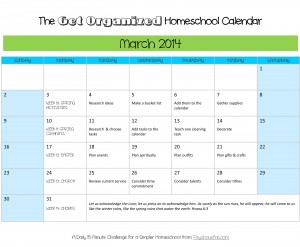
Spring is the season for getting outside, but it’s also a time for cleaning. Fortunately, homeschoolers can combine teaching and cleaning. While you’re unlikely to get it all done this week, you can get a great start in just an hour this week.
#1 Research and choose tasks
Which tasks should you tackle in your spring cleaning? You may not know where to start. Check out this Pinterest list of spring cleaning chores. Decide which of these would give your home the freshest feel. Though not a part of the list, you might want to work on the garage and get it ready for the spring activities you chose last week.
#2 Add tasks to calendar
How will you get spring cleaning done in addition to your regular activities? You’ll need to make time for it. Either make spring cleaning a regular part of your day for the next few weeks or schedule when you will do particular cleaning chores. Remember, a little spring cleaning is better than none!
#3 Teach one cleaning task
If you’ve never taught the kids how to clean the cobwebs, beat the rugs, or wash the windows, now is the time. You may want to start by reading about the history of spring cleaning. Consider your children’s ages, then teach them the why, the what, and the how of one cleaning task. Turn on some upbeat music and let them have a go at it. You may be surprised if you actually have fun.
#4 Decorate
Adding some fresh spring decorations or rearranging your rooms can lift all your spirits and keep you motivated the rest of the year.
First, pull out spring decorations from storage and display them. Kids love helping with this. Declutter those items you no longer want.
I’m a Christian psychologist turned homeschooling mother of six. My life can be a little crazy, so I look for sanity-saving ideas to use and share. I hope you’ll read my About page to learn more.