Can a Productivity Ritual Help You Get More Done? Image courtesy of Gualberto1070 / FreeDigitalPhotos.net
Are these emails ending up in your Promotions folder on Gmail? Here’s how to get them out. I just discovered that this post was delivered as scheduled. My sincere apologies!
This is Week 24 of a Year of Living Productively
This week I tested whether a productivity ritual (as described by Simple Productivity Blog) of preparing for each work session mentally with prayer and physically by gathering materials would help me get things done. Scroll to the bottom of last week’s post for more details.
How a Productivity Ritual Saved My Sanity This Week
Gave me a sense of peace. I used to be careful to pray before I wrote. This week I realized I haven’t been and I haven’t enjoyed the focus and flow I used to have.
Helped me work more efficiently. I remembered to grab my blogging notebook, for example, and was able to get more posts written in less time than I have in weeks.
How a Productivity Ritual Made Me Crazy This Week
Not conducive to much of the week’s work. I hosted two large parties and a house guest this week. There wasn’t a simple way of “gathering materials” for this, though I made plenty of trips to the store! I’ve been going strong all day long and had rare occasions when I felt like a new work period was starting for which the ritual would be effective.
Kept forgetting to use it. I haven’t kept the usual schedule this week and this habit hasn’t been developed, so I forgot about using it. When I did remember, I wasn’t sure how to use it for the work in front of me.
Did a Productivity Ritual Help Me Get Things Done?
Yes, when it was appropriate. When I sat down at my desk to work on my blog, I loved it! Most likely I was intuitively using this ritual as I got everything together I needed for entertaining this week. I could have benefitted from it more had I been more efficient in gathering cleaning supplies and more intentional about praying before activity changes. It’s something I want to continue to do in the future without trying to shoe-horn it into all of my work.
**UPDATE**
I still use productivity rituals to good effect. I make sure I’m comfortable, check my computer, and pray before writing.
The Productivity Approach I’ll Be Using for Week 25
The concept. I’ve already tested Pomodoros and found them to be beneficial. However, I was working for 50-minute periods. I already use ten-minute cleaning periods with the kids and they work. But I haven’t been using these short work periods that overcome resistance and procrastination in other areas of my life. For example, I have some paper scrapbooking kits that I keep saving for “when I have time.” You and I both know I won’t get to them with that criterion. This week, I’m going to spend ten minutes a day on them.
The other concept explained in Make it Happen that I was very excited about was making a list of things we want to create and things we want to conquer. This dichotomy really resonates with me. The labels we use for our work are very powerful. Imagine having a “to conquer” list vs. a “thankless” list. This week I want to create two scrapbook pages using a kit and I want to conquer selling things on eBay and Amazon. I already feel relieved thinking about working on this just 10 minutes a day.
If you’d like to join me this week, here’s what you do. Buy and read Make it Happen in Ten Minutes a Day {affiliate link} if you want to, but it’s not required. Choose a create and a conquer task for the week and work on them just ten minutes a day each. If you can’t afford twenty minutes a day, choose just one of these tasks to focus on.
Click here to see how my week of 10 Minutes a Day went.
You can now subscribe to productivity posts separate from the rest of Psychowith6 content here.
If you’ve tried a Productivity Ritual to increase your productivity, please comment. I will no longer be including polls.
Here are the links to the productivity hacks I’ve tried so far:
Can Beat the Week Help You Get More Done? Image courtesy of arztsamui / FreeDigitalPhotos.net
This is Week 23 of a Year of Living Productively
This week I tested whether attempting to get a week’s worth of work done by Thursday (what I called Beat the Week) would help me get more done. 99u calls it “reward efficiency.” The motivation was to have time at the end of the week to do what I wished.
How Beat the Week Saved My Sanity This Week
The weekly planning focused my efforts. A number of productivity hacks I’ve tested have made me a believer in reviewing the week ahead. It helps me feel on top of things.
Helped me keep my expectations realistic. As I considered what I could really do in a week (a short week no less), I was reminded of how important this is for me to learn. I always think I can squeeze a year’s worth of activities into a week.
How Beat the Week Made Me Crazy This Week
Hard to maintain a closed list. I didn’t add new tasks to the week’s list, but they appeared and had to be done anyway. Even though I made progress, I didn’t feel like I was because of the other work I had to do.
I had a singular focus this week. I have an international house guest arriving this week and I found myself ignoring my list in favor of getting ready for his arrival. The list actually annoyed me like a distraction.
I felt like I was cheating. Because I didn’t do a good job of keeping my list manageable (especially in light of pressing commitments), I found myself postponing tasks I had included on the list. I didn’t feel I deserved the reward of time off since I hadn’t actually completed those tasks and quite frankly I gave up. I completed the most important tasks on time, but this felt due to the impending arrival of our guest more than anything.
Did Beat the Week Help Me Get Things Done?
Not really. I did work hard this week to get things done by Thursday, but not because I wanted time off. I really won’t get time off as I have an out-of-town trip and two big parties to get ready for. It wasn’t the best week to test this approach. I also think this approach could be useful in helping me be realistic about what I can get done. However, scheduling a la SmartPad already works for me in this regard.
**UPDATE**
Now that I keep Sundays as a completely free day, I find I am very motivated to get my work done by Saturday at the latest. In a sense, Beat the Week is working very well for me now.
The Productivity Approach I’ll Be Using for Week 24
Can a Productivity Ritual Help You Get More Done?Image courtesy of Gualberto1070 / FreeDigitalPhotos.net
This week I’ll be testing a Productivity Ritual. Simple Productivity Blogoffers three aspects to a ritual that can help us get more done: clearing the mind, gathering the materials, and resetting/shifting. For me, this is different than the morning ritual because it is done prior to each work period.
The concept. Clearing the mind helps to maintain focus on the task at hand as does some kind of a resetting ritual. Because I change activities several times throughout the day, I can benefit from this. I am going to pray before I begin a new activity period to satisfy both of these components. Not only will I be forced to focus on the anticipated work, but I should have a better attitude about the work.
The final aspect of a productivity ritual that I’m really excited about is gathering materials. Here’s why I’m so eager. I am one of the children’s worship leaders at my church and until recently I had begun to dread my week to serve. Pulling craft and music materials out of the cabinet was risky because it was stuffed and disorganized and nothing had been prepared in advance. Fast forward to a couple of weeks ago when a new coordinator took over. Not only were all the supplies organized, but everything was set up and ready for me to use. I enjoyed leading so much in this environment that I told the coordinator I would serve more often.
The takeaway for me is that I am more productive (and happier) when I have what I need ready to go. I do this when I cook, but rarely when I work. For example, I will sit down to write a week’s worth of blog posts for The Inspired Day and realize that my blogging notebook is not on my desk. Rather than run to get it, I skip planning a week’s worth of posts at once, losing time in the process.
If you’d like to join me this week, here’s what you do. Read Simple Productivity Blog’s post on a productivity ritual. Decide how you will clear your mind and reset between activities and pledge to gather materials before you begin.
Click here to see if a productivity ritual worked for me!
You can now subscribe to productivity posts separate from the rest of Psychowith6 content here.
If you’ve tried Beat the Week to increase your productivity, please vote in the poll below.
Here are the links to the productivity hacks I’ve tried so far:
Can a Morning Ritual Help You Get More Done? Image courtesy of winnond / FreeDigitalPhotos.net
This is Week 22 of a Year of Living Productively
This week I tested whether a morning ritual could help me get more done using Curt Mercadante‘s article as inspiration. I already have a morning ritual in place of exercising first thing in the morning followed by a devotional time. What was new was not checking email in the morning. Click here to see more details.
How a Morning Ritual Saved My Sanity This Week
I finished everything faster. From getting out the door to my workout, everything I did prior to checking email went smoothly, allowing me to get more done.
I had less stress. Part of my morning ritual is to review my day. Without including incoming emails in that review, I found that the day seemed more manageable. By the time I checked email at lunch time, I had already accomplished a lot and was ready to add new tasks to my list (typically to be addressed the next day).
How a Morning Ritual Made Me Crazy This Week
Habit withdrawal. Breaking a habit requires quite a bit of mental focus. I realized how often I was relying on my email for downtime in the mornings and had to pay attention to not “lighting up.”
Feeling disconnected. I have a few people in my life I’m close to who communicate with me primarily via email. Waiting to check my email until later in the day made me feel distanced from them and even rude. Even though this is how I felt, I don’t think it was valid. I seriously doubt anyone was thinking, “WHY hasn’t she responded yet?”
Did a Morning Ritual Help Me Get Things Done?
It really did. I didn’t realize that in trying to wake up by reading email and checking it during down times, that I was actually wasting time. I don’t feel I was any less social this week and I was much more efficient at processing email when I did get to it. I already know how critical all the other aspects of my morning ritual are to having productive days. Now I know that I should break the email-in-the-morning habit for good.
**UPDATE**
Even though I get more done when I don’t look at my email, I have to admit it’s a habit I still have. I don’t feel very motivated to break it, because it doesn’t interfere with my overall morning ritual. I’m very happy with how I use my time in the morning and I do believe it’s a critical component of productivity for me.
The Productivity Approach I’ll Be Using for Week 23
This week I’ll be testing what I call Beat the Week. The idea is to work from a weekly to-do list. When you finish the list, you’re done for the week. 99u calls this “rewarding efficiency.”
The concept. If the reward for working harder is more work, the motivation is lacking. Having the opportunity for free time by getting your work done faster should foster efficiency.
There are a couple of considerations for those who work at home and those who have traditional jobs. First, the weekly list has to be manageable. It should be a true week’s work, so you can finish early and feel justified in being rewarded for doing so. Second, the reward may not be time off if you have a traditional job, but it could be more enjoyable work or tasks. Finally, not all work will be completed. As a homeschooling mother, I can’t tell my kids I can’t help them because I’ve finished working for the week. Neither can a small business owner do that. But the big weekly tasks can be finished early, leaving us with a lot more margin for dealing with urgent tasks and even fun.
If you’d like to join me this week, here’s what you do. Read the “Rewarding Efficiency” section of 99u’s article on productivity. Create a manageable list of to-do’s for the week. Get them done as early in the week is possible, so you can enjoy flexible time. I’m aiming for Thursday!
I got my most important tasks done first. I neglected to mention last week that the 12 Week Year recommends scheduling the strategic block during the first part of the week so it’s likely to get done. I did my 3-hour stint on Monday and couldn’t have been more excited about making progress on work that I’d been neglecting so I could attend to day-to-day tasks.
Pre-planned activities made the time go on and on. I didn’t just use time blocking to “work on homeschool planning” or “start my book.” Having used the 12 Week Year program to set three goals for the next 12 weeks and weekly benchmarks that had to be achieved for each, I knew exactly what to do with my 3-hour strategic block. I took no breaks, choosing instead to switch goals when I needed a change of pace. I’m almost a week ahead and couldn’t be more thrilled with what I’ve gotten done.
Having guilt-free relaxation time made me more productive. Trying to mix work and play and family can be pretty frustrating. Knowing that I had a 3-hour block of time to do absolutely anything (I read and watched TV) helped motivate me to return to work. I wasn’t interrupted, but in the future I would like to make sure everyone knows that Mom is on a mini-vacation during this time.
Motivated me to finish the rest of my work. After finishing my 3-hour time block on the big stuff, the rest seemed easy to knock out, regardless of how I approached it.
How Time Blocking Made Me Crazy This Week
Buffer blocks don’t work in the summer. I think having buffer blocks twice during the day to field the kids’ homework questions and my husband’s requests will work great during the school year. When my husband isn’t working as much (he sells library books to schools) and the kids are jumping from one fun activity to the next, they couldn’t be less interested in whether or not I have a “Buffer Block.” I didn’t find it necessary for handling other work because I already have a routine.
Did Time Blocking Help Me Get Things Done?
A very enthusiastic YES! What I’m most pleased with is the fact that I made serious progress on goals that would otherwise have been neglected. What’s more is the fact that I had peace of mind both in knowing I’d gotten the important work done and had reserved free time, too. I will be continuing to use the time blocks as part of the 12-Week Year and will give a full review of the approach in September (as it’s impossible to test in a week).
**UPDATE**
I still love time blocking and scheduling. By taking time blocks seriously and making them a habit, I have been able to accomplish my goals.
The Productivity Approach I’ll Be Using for Week 22
This week I’ll be testing a morning ritual. I have a morning ritual–most people do. But I could benefit from an improved one. The change I am most interested in making this week (because I already exercise and have a time of prayer and Bible reading) is not reading email right away.
The concept. Curt Mercadante encouraged me to give up my habit of checking email first thing in the morning, attesting to the benefits on productivity.
A morning ritual can be used much like stretching for an athlete. The activity we engage in first can set the tone for the whole day and can be used to increase our productivity and improve our mood.
If you’d like to join me this week, here’s what you do. Read Curt’s article. Decide which activity will best prepare you for a productive day and plan to do it first. I will not be checking email first from now on when I roll out of bed. Exercise is my best first activity (after the necessaries ;-)).
Click here to see how my week testing a morning ritual went.
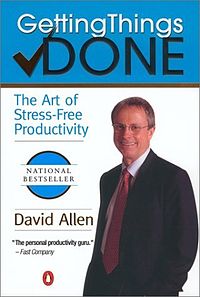
This week I tested Getting Things Done. {affiliate link} I put all my tasks into a trusted system and labeled them according to priority, context, time, and energy required. Many of them were associated with a project as well. Scroll to the bottom of last week’s post to see my plan.
How Getting Things Done Saved My Sanity This Week
Writing everything down gave me peace of mind. I was at a place where I had a lot of things rolling around in my head and it really was a relief to write them all down and then process them.
A weekly review gave me added peace of mind. For the first time, I looked at IQTell‘s Weekly Review option which has checkboxes for all aspects of it, including considering higher level goals. When I tried GTD many years ago, this was the piece that I was missing.
Working by context streamlined my work. I was in a low-energy state with iPhone in hand, so I looked up tasks I could do with my phone. Turns out something I dreaded (cleaning up my mangled address book) was easy and enjoyable. I also had lots of tasks that needed doing in our outside office. I realized I was putting those off because I didn’t want to interrupt my flow to go out there. Once I had a nice list of things to accomplish there, I was ready to get to work.
Made me think about limiting my work to just each project’s next action. As a blogger, I have dozens of ways to improve my blog on my task list. I realized I was trying to work on them all at once instead of focusing on the one with the most impact before moving on to the others.
How Getting Things Done Made Me Crazy This Week
Didn’t give me a short list of things to do today. Only things you absolutely must do on a certain day are supposed to go on a calendar. For that reason, I didn’t date a task unless it was vitally time sensitive. Within just a few days, I couldn’t stand wading through a long list of tasks, even within priorities or contexts. I have developed a habit of dating tasks I want to at least consider doing on a given day. I started dating them and was fine.
The mind like water didn’t last. If I write down absolutely everything I want or need to do, I eventually become more stressed. I feel (and rightly so) that there is no way I will ever get to it all (GTD or not). Before I wouldn’t write things down that I knew I didn’t need to attend to any time soon or that I would be reminded of naturally. I think this may be the difference in me using GTD at home versus in a traditional work environment. GTD also offers no simple test for determining that you’re taking too much on. The notion is that sometime, you’ll get it all done. If you can’t do it now, just put it in Someday/Maybe. Just label it and you’ll get to it. I think that’s my problem anyway, so GTD didn’t help.
No routines. GTD doesn’t talk about the importance of routines. At first, I kept up my routines as usual because they work for me. But soon I found myself thinking I should get right to my next actions and maybe I could skip the routines. Of course, that didn’t work! Then I had other problems.
Did Getting Things Done Really Help Me Get More Done?
In a limited sense, yes. Specifically, I was able to get more of my context-specific tasks done and they were things I had procrastinated on. I noticed that I don’t think about tasks this way much. I didn’t use energy or time as a way of working on tasks at all, for example. That’s a matter of not having the habit and also giving GTD such a short test. Some readers have pointed out that I can’t possibly assess the full value of an approach in one week’s time. I think that’s a valid concern with several approaches, GTD being one of them. However, I have begun to identify key factors in enabling me to be the most productive and in this case, I recognize that not having a short list of tasks to work from each day does not work for me. If it works for you, please continue using it. I will continue assigning some contexts to my tasks and doing a weekly review.
**UPDATE**
I don’t use contexts at all in my work. I also schedule everything in opposition to David Allen’s advice and it works beautifully for me.
The concept. Stephanie Vozza of Entrepreneur calls time blocking a productivity power tool.
Rather than trying to tackle tasks in a willy-nilly fashion, time is set aside to ensure that you address the work you rarely get to–the work that will take your business, your career, or your life to the next level. The 12 Week Year calls these Strategic Blocks. They are “a three-hour block of uninterrupted time that is scheduled into each week. During this block you accept no phone calls, no faxes, no emails, not visitors, no anything. Instead, you focus all of your energy on preplanned tasks–your strategic and money-making activities.”
Rather than lose time recovering from interruptions, time is set aside to deal with those timely, but not urgent requests and issues. The 12 Week Year calls these Buffer Blocks designed to deal with low-value activities. “For some, one 30-minute buffer block a day is sufficient, while for others, two separate one-hour blocks may be necessary. The power of buffer blocks comes from grouping together activities that tend to be unproductive so that you can increase your efficiency in dealing with them and take greater control over the rest of your day.” The people who need your attention can know they will have it during buffer time. I plan to have “office hours” twice a day so my family can have my full attention.
Finally, time is also carved out for leisure. The 12 Week Year calls these Breakout Blocks. “An effective breakout block is at least three-hours long and spent on things other than work. It is time scheduled away from your business during normal business hours that you will use to refresh and reinvigorate your mind, so that when you return to work, you can engage with more focus and energy.” I think “normal business hours” could be interpreted loosely or you could be fired! The point is to have guilt-free time to do anything you want to do to be refreshed.
If you’d like to join me this week, here’s what you do. Read this article on time blocking. Decide what strategic activities you will work on for the week and schedule a three-hour block to address it. Determine how to eliminate interruptions. Then schedule one to two buffer blocks per day. Finally, schedule your Breakout Block of three hours for the week. Use it to do things you’d like to do guilt free. The rest of the time can be spent doing work as usual.
Click here to see how my week of time blocking went.
This week I tested Mark Forster’s Ultimate Time Management System. I used a paper list of things I wanted to accomplish in the next two weeks. I worked the old list in any way I wanted, but had to continue through the newly added list of tasks, having to return to the old list when the end of the new list was reached. Scroll to the bottom of last week’s post for more details.
How the Ultimate Time Management System Saved My Sanity This Week
Had me focused on accomplishing “old” tasks. I’ve mentioned before how much I like a closed list of tasks. I found myself very motivated to cross off to-do’s that have been languishing in favor of the new shiny tasks I added.
Gave me an overview of how quickly tasks add up. Adding tasks to IQTell can shield me from the sheer number of them. Not so with a paper list.
No complicated rules. I really didn’t feel hampered in any way as I did what I felt needed doing.
How the Ultimate Time Management System Made Me Crazy This Week
I resisted adding new tasks to the list. Instead of writing them down and seeing my list grow (and potentially keeping myself from doing what I wanted to do), I just DID the new shiny things. A big part of the problem was having a paper list. The list was in one part of the house and I was in another. Why bother finding it to write down a new task when you can just do it? That was my philosophy this week anyway. Unlike DIT, the system offers no clues that you are taking on too much work.
The closed list was too large. On Mark’s forum, Seraphim, mentioned using a one-week time frame for the old list. I think that would have helped a lot. Doing a two-week test made me feel like there was no way I could finish the old list, so I gave up.
Things fell through the cracks. Every day, I put a dot in front of the tasks I really needed to accomplish that day. That helped. But I found myself missing things anyway, because I wasn’t using my Due Today IQtell list.
No big picture. There was such a large mishmash of tasks and projects on the list with no prioritization, that I felt disoriented. Reading the whole list every day was time-consuming and anxiety-provoking.
Did the Ultimate Time Management System Help Me Get More Done?
At first, yes. But after several days, the motivation to finish the old list disappeared. I think a week’s list of things you think you can realistically do might have been more effective. The rules didn’t help me with procrastination, but that’s most likely because I got nowhere near the end of the old list.
**UPDATE**
I honestly don’t worry about old lists of tasks anymore. I look through my list of tasks on ToDoist and choose one per area during my weekly planning session. I often delete tasks that have become irrelevant at that time.
The Productivity Approach I’ll Be Using for Week 20
This week I’ll be testing David Allen’s Getting Things Done. I’ll be using IQTell to collect everything I need to do. I’ll be organizing my tasks by priority (I use Must, Should, Could), context (iPhone, errand, etc.), and by time and energy required. Tasks will be sorted into appropriate projects. Rather than Someday/Maybe, tasks will be given a date to consider them in the future. Why? Have you seen Pinterest? That’s my Someday/Maybe list. The notion that I could review all of my Someday/Maybe’s every week during a review is just funny.
The concept. David Allen‘s primary goal seems to be not just helping people get things done, but to have peace of mind while doing so. He points out that unless we put all of our potential tasks into a “trusted system” (that we know will keep us from forgetting the important stuff), we will continue to be anxious about them. A weekly review is done of everything on our plates (paper inboxes, meeting notes, project support files, etc.), allowing tasks to be trashed, filed, done (if less than 2 minutes – though he mentions situations for which this time varies), delegated, or deferred (put on calendar or into a task list). He suggested this weekly review take place on Friday so the weekend can be peaceful, but any day that works is acceptable.
Projects are worked on in terms of Next Actions — the next physical action you can take to move the project forward. The idea is that we often resist work because we haven’t made the steps required clear. “Plan birthday party” might have a Next Action of “Make a list of potential dates.”
Much criticism has been made of David’s concept of working according to context in our age of smart phones and ubiquitous computers that enable us to do so much. However, rereading the book surprised me that context is just one way David says we can choose to actually do the work. Once all tasks are in your system (paper or digital), you may be working completely around your calendar (e.g., meetings) or you could choose to work by priority (nothing about GTD prohibits Eat That Frog, for example), time required (I have 15 minutes before I have to leave) or energy level (at the end of the day, you may want to read, listen to podcasts, or watch videos, for example).
If you’d like to join me this week, here’s what you do. Read this summary of Getting Things Done. You’ll see there is more to the philosophy than I’ve mentioned. Choose a system to collect your to-do’s. Any inexpensive office store planner would do the trick. Besides IQTell, here is a list of free sites for managing GTD digitally. This infographic may help you in organizing your work after collecting it. Then get things done!
Click here to see how my week of contexts in GTD went.
I’m a Christian psychologist turned homeschooling mother of six. My life can be a little crazy, so I look for sanity-saving ideas to use and share. I hope you’ll read my About page to learn more.